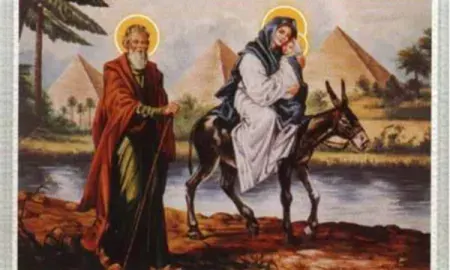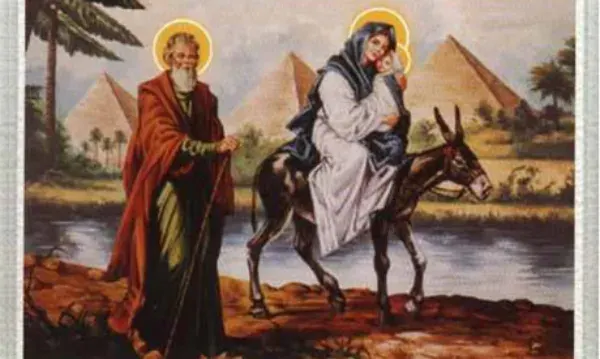
In the second chapter of the Gospel of Matthew, the evangelist records a brief but momentous event: warned by an angel that King Herod was seeking to kill the infant Jesus, Joseph took Mary and the child and "departed into Egypt." The text gives no further details — no route, no duration, no specific sites. But in Egypt, the Coptic Christian Church has preserved a detailed tradition of the Holy Family's journey through the country, based on early church manuscripts, the testimony of bishops, and the miraculous events said to have occurred at specific locations along the way. This tradition, maintained and elaborated over twenty centuries, identifies more than 25 sacred sites across Egypt where the Holy Family rested, sheltered, drew water, or performed miracles — forming a pilgrimage trail of extraordinary historical and spiritual depth.
The Egyptian government officially recognises and promotes the Holy Family Trail as a national pilgrimage and tourism route. Pope Francis's 2023 call for pilgrimage to the Holy Family sites in Egypt gave the trail renewed international attention. For Coptic Christians, this journey is not historical curiosity but living faith — the sites are active places of worship, maintained by the Coptic Orthodox Church, visited by millions of Egyptian Christian pilgrims each year, and accessible to international visitors of all denominations.
The Biblical Foundation: Matthew 2:13–15
The scriptural basis for the Holy Family's time in Egypt is brief but theologically significant. Matthew 2:13–15 reads: "An angel of the Lord appeared to Joseph in a dream. 'Get up,' he said, 'take the child and his mother and escape to Egypt. Stay there until I tell you, for Herod is going to search for the child to kill him.' So he got up, took the child and his mother during the night and left for Egypt, where he stayed until the death of Herod. And so was fulfilled what the Lord had said through the prophet: 'Out of Egypt I called my son.'"
Matthew quotes the prophet Hosea (11:1), who originally referred to Israel's Exodus from Egypt — but Matthew interprets the verse as a prophecy of Jesus' own sojourn in Egypt. For the Coptic Church, this brief passage is the seed from which a vast tradition has grown: the Homily on the Flight into Egypt by Theophilus of Alexandria (385–412 AD) and other early Coptic texts expand the journey into a detailed narrative of travels, miracles, and divine interventions that forms the basis of the Holy Family Trail as mapped today.
The Holy Family Trail: Route Overview
The Holy Family Trail follows the traditional route from the Mediterranean coast — where the family is believed to have entered Egypt — south through the Delta, to Cairo, and then up the Nile Valley to the furthest point of their journey in Upper Egypt at Qusqam (modern Assiut / Dairut el-Sharif), before the family turned and retraced their steps northward to return to Nazareth after the death of Herod. The total distance covered, according to tradition, is approximately 3,500 kilometres over nearly four years.
| Stage | Region | Key Sites | Distance from Cairo |
|---|---|---|---|
| 1 — Entry | North Sinai / Delta coast | Tell Basta (Zagazig) · Bilbeis · Samanoud · Sakha | 80–150 km north-east |
| 2 — Cairo | Cairo — Old Coptic district & surrounds | Church of Virgin Mary (Maadi) · Abu Serga · Hanging Church · Zeitoun apparition church | Cairo (0 km) |
| 3 — Nile Valley | Heliopolis · El-Matariyyah · Giza | Virgin Mary Tree (Matariyyah) · Church of St Sergius (Heliopolis) · Monastery of Hamam Faroun | 10–30 km |
| 4 — Fayyum | El-Fayyum oasis | Church of the Virgin at Deir el-Adra · Monastery of Gabriel | ~100 km south-west |
| 5 — Minya | Middle Egypt — Minya governorate | Gebel el-Teir Monastery · Church at Deir el-Barsha · Ishnin el-Nasara | ~250 km south |
| 6 — Journey's End | Asyut / Dairut el-Sharif (Upper Egypt) | Monastery of the Virgin at Qusqam (Dairut el-Sharif) — the furthest point of the journey | ~375 km south |
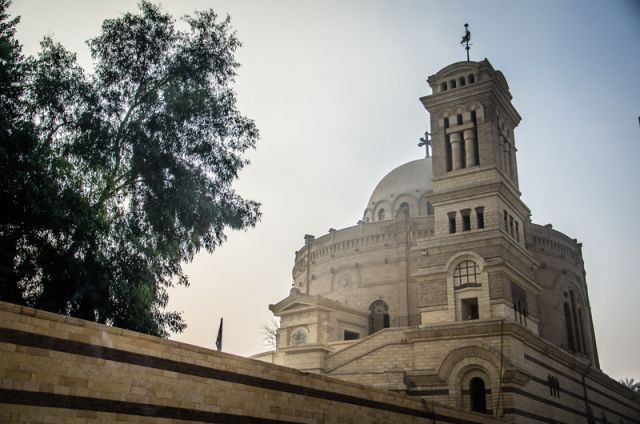
The Key Sites: In-Depth Guide
1. Church of Abu Serga — Old Coptic Cairo
The single most sacred site on the Holy Family Trail is the Church of Saints Sergius and Bacchus (Abu Serga) in Old Coptic Cairo — specifically the crypt beneath the church floor, which Coptic tradition identifies as the cave where the Holy Family sheltered during their time in the Egyptian capital. The crypt is accessed by a narrow stair descending below the church floor; it is partially flooded during the Nile flood season (July–October, when the water table rises) and accessible on dry feet the rest of the year. The stone walls of the cave, the ancient granite columns, and the candlelit icons create an atmosphere of profound antiquity. This is one of the oldest actively venerated Christian sacred spaces in the world. (See our complete Coptic churches guide for visitor details.)
2. Church of the Virgin Mary — Maadi
In the Cairo suburb of Maadi, on the east bank of the Nile, the Church of the Virgin Mary marks the traditional departure point for the Holy Family's journey south into Egypt — the spot on the Nile bank from which they are said to have taken a boat upriver. The church is most famous for a miraculous event in 1976, when a Bible — open at the Book of Isaiah, Chapter 19 ("Blessed be Egypt my people") — was found floating on the Nile and deposited on the church steps by the current. The event is regarded as miraculous by the Coptic community and the Bible is preserved in the church. The site is peaceful, beautifully maintained, and far less crowded than the Old Cairo churches.
3. The Virgin Mary Tree — El-Matariyyah
In the Matariyyah district of Cairo (ancient Heliopolis), a sycamore fig tree is venerated as the tree under whose shade the Holy Family rested on their arrival in the Cairo area. The current tree is not the original (sycamore figs live only 300–500 years) but has grown from the original rootstock — making it a direct biological descendant of the tree described in early church texts. The tree is enclosed in a garden beside the Church of the Holy Family in Matariyyah and is one of the most visited sites in Cairo for Coptic pilgrims. According to tradition, a spring appeared at this spot to refresh the Holy Family — the area around Matariyyah was famous in antiquity for its gardens and water.
4. Church of the Virgin Mary — Zeitoun (Apparition Site)
In the working-class Cairo district of Zeitoun, one of the most remarkable and best-documented religious phenomena of the 20th century occurred between 1968 and 1971: luminous apparitions, widely reported to be the Virgin Mary, appeared above and around the dome of the Church of the Virgin Mary and were witnessed by millions of Egyptians — Christian and Muslim alike — over a period of three years. The apparitions were officially recognised by Pope Cyril VI of the Coptic Church and were investigated by Egyptian government officials without contradiction. They coincided with a period of national trauma (the aftermath of the 1967 war with Israel) and were interpreted across religious communities as a sign of divine consolation. The church today is a functioning pilgrimage site with a peaceful garden. (See our Coptic churches guide for visitor information.)
5. Monastery of Gebel el-Teir — Minya
Approximately 250 km south of Cairo, on a dramatic cliff above the Nile in the Minya governorate, the Monastery of the Virgin Mary at Gebel el-Teir (Mountain of Birds) occupies the site where, according to tradition, the Holy Family sheltered in a cave cut into the cliff face and the infant Jesus, extending his hand, caused the overhanging rock that was threatening to fall to remain in place — the "miracle of the suspended rock." The monastery, founded in the 4th century AD and rebuilt multiple times, is one of the most atmospherically situated in Egypt: the cliff rises directly above the Nile, the monastery perched at its summit, the river visible below and the desert cliffs of the opposite bank beyond. It is accessible by boat from the Minya bank and is a standard stop on organised Holy Family pilgrimage tours.
6. Monastery of the Virgin Mary — Qusqam (Journey's End)
At Dairut el-Sharif near Asyut in Upper Egypt — approximately 375 km south of Cairo — stands the monastery marking the southernmost point of the Holy Family's journey through Egypt. According to Coptic tradition, it was here that the angel appeared to Joseph again, announcing that Herod had died and that it was safe to return to Israel. The community here calls the site Qusqam — and it is the turning point of the entire trail: everything south of here is beyond the Holy Family's journey, everything north is the route of their return. The monastery today is an active Coptic community and a major pilgrimage destination, particularly on the feast day of the Virgin Mary (celebrated in August on the Coptic calendar).
What no other guide tells you: The Coptic tradition records that during the Holy Family's journey through Egypt, all the idols in every temple they entered fell from their pedestals — a motif drawn from Isaiah's prophecy ("The idols of Egypt will tremble before him"). This detail, preserved in early church manuscripts, was interpreted by Christian commentators as the fulfilment of Old Testament prophecy in real time: the living God walking through the land of the greatest religious tradition in the ancient world, and its gods collapsing before him. Whether literal or symbolic, it gives the journey a narrative drama that transcends simple refugee flight.
Planning Your Holy Family Pilgrimage: Practical Guide
| Itinerary Type | Duration | Sites Covered | Best For |
|---|---|---|---|
| Cairo Holy Family Day | 1 full day | Abu Serga · Hanging Church · Virgin Mary Maadi · Matariyyah tree · Zeitoun church | Visitors with limited time; combination with Coptic Cairo |
| Cairo & Minya | 3–4 days | All Cairo sites + Fayyum + Gebel el-Teir monastery + Minya valley sites | Committed pilgrims; first-time visitors to Middle Egypt |
| Full Holy Family Trail | 7–10 days | All major sites from Delta to Qusqam (Asyut) — complete pilgrimage route | Serious pilgrims; groups; those combining with Luxor and Aswan |
| Egypt & Holy Family | 11–15 days | Holy Family Trail + Nile cruise + Luxor + Aswan — combines pilgrimage with the classic Egypt itinerary | Groups wanting the full Egypt experience with pilgrimage focus |
Visitor Information: Key Holy Family Sites
| Site | Location | Entrance Fee | Open to All Faiths? |
|---|---|---|---|
| Abu Serga Church & crypt | Old Coptic Cairo | Free | ✅ Yes |
| Church of Virgin Mary — Maadi | Maadi, south Cairo | Free | ✅ Yes |
| Virgin Mary Tree — Matariyyah | Matariyyah, Cairo | Free | ✅ Yes |
| Zeitoun apparition church | Zeitoun, Cairo | Free | ✅ Yes |
| Monastery of Gebel el-Teir | Minya, ~250 km south | Free (donation) | ✅ Yes |
| Monastery of Qusqam | Dairut el-Sharif, Asyut | Free | ✅ Yes |
| Cave Church — Mokattam | Mokattam, Cairo | Free | ✅ Yes |
The Holy Family Trail and Egypt's Religious Tourism
The Holy Family Trail connects directly to several sites already documented in depth on this blog. For a complete picture of Christian history in Egypt, combine the Holy Family pilgrimage with visits to the Cave Church at Mokattam, the Coptic churches of Old Cairo, and — for those extending south — the Temple of Philae at Aswan, which also bears early Christian inscriptions from the period when the temple was converted into a church in the 6th century AD.
Egypt received 18 million tourists in 2025 — the highest number since 2010 — and religious tourism is one of the fastest-growing segments. The Holy Family Trail represents a unique opportunity: a pilgrimage route of world significance, largely unknown outside the Coptic Christian community, operating through some of the most welcoming and historically rich sites in the country.
Frequently Asked Questions — Holy Family in Egypt
Did the Holy Family really go to Egypt?
The flight into Egypt is recorded in the Gospel of Matthew (2:13–15) and is accepted as historical by most mainstream Christian denominations. The specific route and duration are drawn from Coptic Christian tradition rather than scripture — early church manuscripts, most notably the Homily on the Flight into Egypt by Theophilus of Alexandria (4th century AD), elaborate the biblical account into a detailed itinerary. Whether taken as historical record or living tradition, the sites are sacred to millions of Christians and profoundly moving to visit.
How long did the Holy Family stay in Egypt?
The Gospel of Matthew gives no specific duration. Coptic Christian tradition records the stay as three years and eleven months — a period consistent with the span from the birth of Jesus to the death of Herod the Great (4 BC in most scholarly reconstructions, though the precise date is debated).
What is the Holy Family Trail?
The Holy Family Trail is an officially designated Egyptian government pilgrimage and tourism route connecting over 25 sacred sites associated with the Holy Family's journey through Egypt — from entry points in the Nile Delta, through Cairo, the Fayyum, Middle Egypt (Minya), and Upper Egypt to the southernmost point at Qusqam near Asyut. The route was officially mapped and promoted by the Egyptian Ministry of Tourism and the Coptic Orthodox Church working together.
Can non-Christians visit Holy Family sites?
Yes — all Holy Family sites listed in this guide welcome visitors of all faiths and none. The Coptic churches and monasteries of Egypt are known for their hospitality to all visitors. Modest dress (shoulders and knees covered) and quiet, respectful behaviour are the only requirements.
Is the Holy Family Trail safe to travel?
Yes — the route passes through Cairo and the Nile Valley, both of which are safe and well-travelled. The Middle Egypt section (Minya and Asyut) requires a private vehicle and guide; Egypt For Travel handles all logistics including security coordination for this section. Egypt received 18 million tourists in 2025 and the trail is increasingly well-served by organised pilgrimage tourism.
What are the Zeitoun apparitions?
Between 1968 and 1971, luminous apparitions of the Virgin Mary were witnessed above and around the dome of the Church of the Virgin Mary in Zeitoun, Cairo, by millions of people — Christian and Muslim alike. The apparitions were officially recognised by the Coptic Pope Cyril VI and investigated without contradiction by Egyptian government officials. They are among the most extensively witnessed and documented Marian apparitions in modern history and were interpreted across religious communities as a sign of divine consolation during a difficult period in Egyptian history.
Follow the Holy Family Trail in Egypt with Egypt For Travel — browse our Cairo Holy Family day tours or contact us to arrange a complete multi-day pilgrimage itinerary from Cairo to Minya and beyond. Private Egyptologist & Christian heritage guide · All entrance fees · Private vehicle throughout. WhatsApp: +20 155 555 2466. ETA Licence No. 1947.