In most ancient civilisations, women ruled in the shadows — as mothers, regents, and advisors, their influence real but rarely acknowledged in the official record. Ancient Egypt was different. Not perfectly equal — the pharaoh was by default male, and women who ruled as pharaoh are the exception rather than the rule — but significantly more open to female authority than Rome, Greece, Mesopotamia, or any contemporary civilisation. Egyptian queens held formal titles, owned property, conducted diplomatic correspondence with foreign powers, commanded the resources of the royal household, and in several cases ruled Egypt outright as pharaoh. The monuments they left behind — temples, tombs, statues, inscriptions — are among the most extraordinary in the ancient world. This is their story.
The Ten Greatest Queens of Ancient Egypt
1. Hatshepsut (c. 1507–1458 BC) — The Female Pharaoh
Hatshepsut is the most successful female ruler in ancient Egyptian history — and by most measures one of the most successful rulers of any gender. She began as regent for her young stepson Thutmose III after the death of her husband Thutmose II, then made the extraordinary decision to assume full pharaonic titles and rule as king rather than regent. For approximately 20 years she governed Egypt as pharaoh — wearing the false beard and double crown of kingship, depicted in statuary with a male body — while Thutmose III served as co-ruler and military commander.
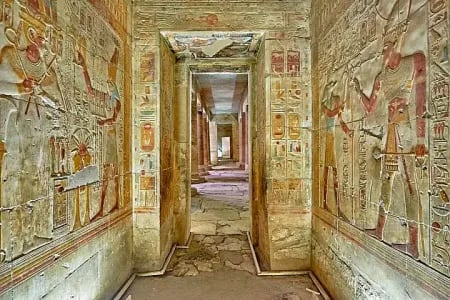
Her reign was defined by trade rather than war. She sent a celebrated expedition to the land of Punt (probably modern Somalia or Eritrea) that returned with myrrh trees, ebony, gold, ivory, and live animals — the event is depicted in vivid relief on the walls of her mortuary temple. She built prolifically: the mortuary temple at Deir el-Bahari (one of the most architecturally refined buildings in Egypt), the Red Chapel at Karnak, and obelisks at Karnak that still stand today. After her death, Thutmose III systematically defaced her images and erased her name from monuments — a damnatio memoriae that was so thorough it nearly succeeded. She was forgotten for 3,000 years until 19th-century Egyptologists pieced together her story from surviving fragments.
Where to see her: Hatshepsut Temple at Deir el-Bahari, Luxor West Bank. Entrance: 220 EGP.
2. Nefertiti (c. 1370–1330 BC) — The Revolutionary Queen
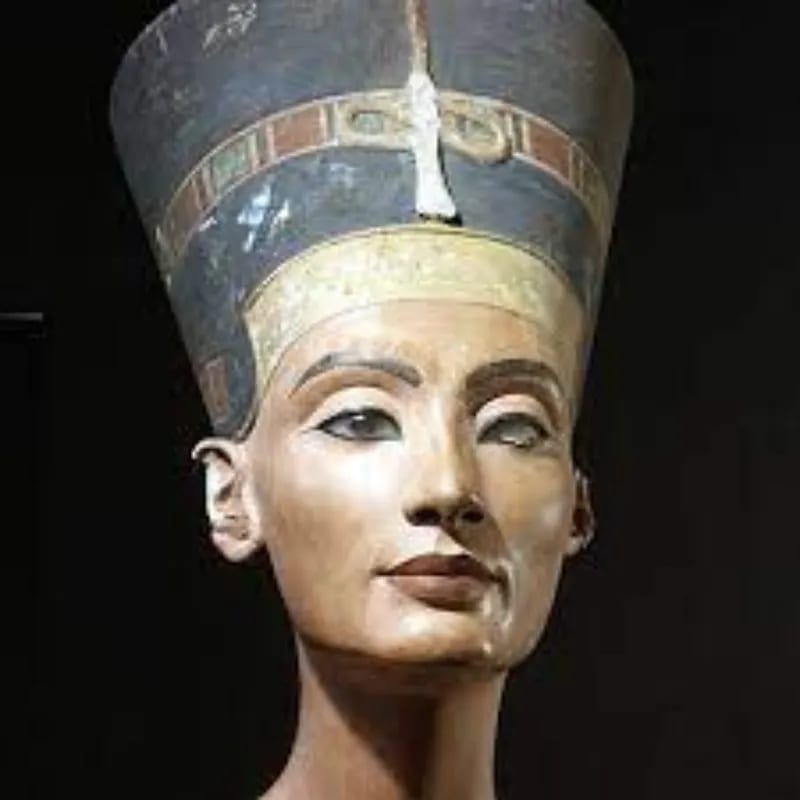
Nefertiti is the most immediately recognisable figure in Egyptian history — the painted limestone bust created by the sculptor Thutmose around 1345 BC, now in the Neues Museum in Berlin, is one of the most reproduced artworks in human history. But beyond the famous bust, Nefertiti was a figure of extraordinary political significance: the Great Royal Wife of Akhenaten, she appears in the art of the Amarna period with an unprecedented frequency and prominence — depicted making offerings to the Aten, driving a chariot, smiting enemies (a role exclusively reserved for the pharaoh in conventional Egyptian art), and officiating at religious ceremonies as a co-equal with her husband.
Some Egyptologists have proposed that Nefertiti ruled as pharaoh after Akhenaten's death under the name Neferneferuaten — a theory supported by inscriptional evidence but not universally accepted. What is beyond doubt is that she wielded extraordinary power during the Amarna period, and that her disappearance from the record around Year 12 of Akhenaten's reign remains one of Egyptology's most debated mysteries. Her mummy has not been definitively identified, though one candidate — the so-called Younger Lady mummy found in KV35 — has been proposed by several researchers.
Where to see her: The Egyptian Museum in Cairo holds Amarna-period objects including boundary stele with Nefertari's image. The Grand Egyptian Museum (opened November 2025) displays the most complete collection of Amarna art outside Berlin.
3. Nefertari (c. 1295–1255 BC) — The Beloved Queen
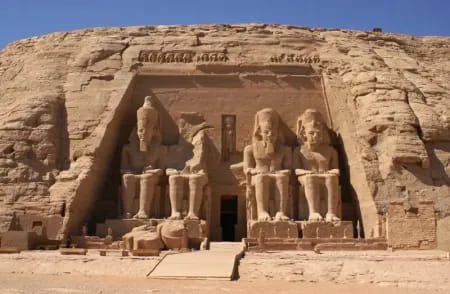
The Great Royal Wife of Ramesses II and the most honoured consort in Egyptian history — dedicated her own temple at Abu Simbel and given the most beautiful tomb in the Valley of the Queens. See our complete Queen Nefertari guide for her full biography.
Where to see her: Tomb QV66, Valley of the Queens, Luxor (1,200 EGP special ticket) · Small Temple, Abu Simbel.
4. Queen Tiye (c. 1398–1338 BC) — The Power Behind the Throne
Queen Tiye was the Great Royal Wife of Amenhotep III — arguably the most powerful and politically influential queen of the New Kingdom, and possibly of all Egyptian history. She was not of royal birth — her father Yuya was a wealthy provincial official, her mother Tjuyu a palace woman — and yet Amenhotep III elevated her to a status unprecedented for a non-royal wife: she was depicted beside him at equal scale, her name was included in the royal cartouche, and she was deified in her own lifetime at the Nubian temple of Sedeinga. Amenhotep III is believed to have consulted her on state matters throughout his reign.
Her political influence continued after Amenhotep III's death: the Amarna Letters — the diplomatic archive of the period, found in Egypt in 1887 — include correspondence from foreign kings addressed to Tiye directly, acknowledging her as a political authority independent of the new pharaoh Akhenaten. The Hittite king Suppiluliuma wrote to Tiye asking her to confirm the details of an agreement made with her husband — treating her as a head of state in her own right. Her mummy has been identified in the Cairo Museum through DNA analysis, making her one of the few New Kingdom queens whose physical remains have been confirmed.
Where to see her: Egyptian Museum Cairo (colossal statue of Amenhotep III and Tiye) · Grand Egyptian Museum (opened November 2025).

5. Cleopatra VII (69–30 BC) — The Last Pharaoh
Cleopatra VII Philopator — the last ruler of the Ptolemaic dynasty and the last pharaoh of Egypt — is the most famous woman in the ancient world and, arguably, in all of world history. Unlike most Ptolemaic rulers, she was the only member of her dynasty to learn the Egyptian language — she spoke nine languages in total, according to ancient sources — and she presented herself as the embodiment of the goddess Isis in Egyptian religious life. Her political genius lay in understanding that Egypt's survival depended on alliance with Rome, and in pursuing that alliance through relationships with the two most powerful Romans of her era: Julius Caesar and Mark Antony.
The child she bore Caesar — Caesarion (Ptolemy XV) — was the last male member of the Ptolemaic dynasty; his image appears beside hers on the outer wall of Dendera Temple in one of the only authenticated contemporary portraits of the queen. After the defeat of Antony and Cleopatra by Octavian at the Battle of Actium in 31 BC, Cleopatra died in Alexandria — ancient sources say by self-administered snake bite, though the exact circumstances remain debated — and Egypt became a Roman province. She was 39 years old.
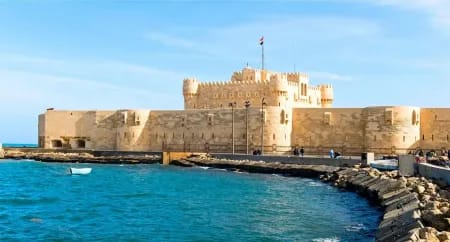
Where to see her: South outer wall of Dendera Temple (relief of Cleopatra and Caesarion) · Alexandria (the city she ruled from).
6. Merneith (c. 3000 BC) — The First Female Ruler
Merneith — wife of the 1st Dynasty pharaoh Djer and mother of Den — is the earliest woman in Egyptian history for whom evidence of ruling power exists. Her tomb at Abydos is of royal scale and equipment, she appears on the Palermo Stone's list of kings, and the seal impressions found in her tomb identify her as "King's Mother" — suggesting she served as regent for her young son. She may be the first woman ever to have wielded royal political power in any known civilisation.
7. Sobekneferu (c. 1806–1802 BC) — Egypt's First Confirmed Female Pharaoh
Sobekneferu (also spelled Neferusobek) of the 12th Dynasty is the first woman in Egyptian history who is confirmed by unambiguous evidence to have ruled as pharaoh in her own right — wearing the double crown, using the full titulary of a king, and appearing in official king lists. She ruled for approximately 3 years and 10 months at the end of the 12th Dynasty, her reign ending with her dynasty. She was the last pharaoh of the Middle Kingdom.
8. Ahhotep I (c. 1560–1530 BC) — The Queen Who Saved Egypt
Ahhotep I was the mother of Ahmose I — the pharaoh who expelled the Hyksos and founded the New Kingdom — and is credited with one of the most dramatic acts of political leadership in Egyptian history. When the Hyksos expulsion campaign faltered after the death of her husband Seqenenre Tao and her son Kamose, Ahhotep stepped in as regent and — according to her son Ahmose's commemorative stele — "rallied the soldiers, she protected Egypt, she brought back the fugitives and united the deserters, she pacified Upper Egypt and expelled her rebels." Her burial equipment included military gold fly-of-valour decorations — the highest Egyptian military honour — awarded to her personally.
9. Ankhesenamun (c. 1348–1322 BC) — Tutankhamun's Queen
Ankhesenamun was the daughter of Akhenaten and Nefertiti and the wife of Tutankhamun. After Tutankhamun's sudden death at approximately 19 years of age, she found herself in an extraordinarily dangerous position: a young queen with no husband and no heir in a court riven by political intrigue. The Hittite archive records a letter she sent to the Hittite king Suppiluliuma I, requesting one of his sons as a husband — a desperate and politically explosive act that had no precedent in Egyptian history. The Hittite prince was murdered on his way to Egypt, probably by Egyptian officials, and Ankhesenamun disappears from the record shortly afterward — her ultimate fate unknown.
10. Arsinoe II (c. 316–268 BC) — The Ptolemaic Goddess-Queen
Arsinoe II was the daughter of Ptolemy I and eventually the co-ruler — and wife — of her brother Ptolemy II Philadelphus. The sibling marriage shocked the Greek world but fitted perfectly into Egyptian royal tradition (where brother-sister marriages among gods were standard). Arsinoe wielded genuine co-regnal power, was depicted on coins alongside her brother-husband as an equal, and was deified in her own lifetime — the first Ptolemaic ruler to receive the full divine cult normally reserved for dead pharaohs. Her influence on the Ptolemaic court's political culture shaped the dynasty for generations.

Female Pharaohs: The Complete List
| Queen / Pharaoh | Dynasty | Date (approx.) | Evidence of Rule |
|---|---|---|---|
| Merneith | 1st Dynasty | c. 3000 BC | Royal tomb · Palermo Stone · Possible regent |
| Nimaethap | 2nd–3rd Dynasty | c. 2700 BC | "Mother of the King's Children" — possible regent |
| Sobekneferu | 12th Dynasty | c. 1806–1802 BC | Full pharaonic titulary · King lists · Statues as king |
| Hatshepsut | 18th Dynasty | c. 1507–1458 BC | Full pharaonic titulary · Deir el-Bahari temple · Obelisks at Karnak |
| Neferneferuaten | 18th Dynasty | c. 1334–1332 BC | Cartouches as pharaoh · Possibly Nefertiti ruling after Akhenaten |
| Twosret | 19th Dynasty | c. 1191–1189 BC | Full pharaonic titulary · Tomb in Valley of the Kings (KV14) |
| Cleopatra VII | Ptolemaic | 51–30 BC | Full pharaonic titulary · Dendera relief · Greek and Roman sources |
Where to See Egypt's Great Queens Today
| Queen | Where to See Her in Egypt | Key Object / Site |
|---|---|---|
| Hatshepsut | Deir el-Bahari Temple · Karnak Temple | Her mortuary temple · Red Chapel obelisks · Sphinx statues (Egyptian Museum) |
| Nefertiti | Grand Egyptian Museum | Amarna period objects · Boundary stelae · (Bust is in Berlin) |
| Nefertari | Tomb QV66 · Abu Simbel Small Temple | Most beautiful tomb paintings in Egypt · Colossal facade figures |
| Queen Tiye | Egyptian Museum Cairo | Colossal statue with Amenhotep III · Mummy (confirmed by DNA) |
| Cleopatra VII | Dendera Temple south wall | Relief of Cleopatra and Caesarion — one of the only authenticated portraits |

Frequently Asked Questions — Queens of Ancient Egypt
Who was the most powerful queen in ancient Egypt?
By longevity and achievement, Hatshepsut is the most successful female ruler — 20 years as pharaoh, a peaceful and prosperous reign, and a building programme that left permanent monuments. By political influence as a consort rather than ruler, Queen Tiye (wife of Amenhotep III) wielded the most documented power — treated as a head of state by foreign kings and active in diplomacy decades into her widowhood.
Were there female pharaohs in ancient Egypt?
Yes — at least six women are confirmed or strongly evidenced as having ruled as pharaoh in their own right, bearing the full pharaonic titulary: Merneith (1st Dynasty), Sobekneferu (12th Dynasty), Hatshepsut (18th Dynasty), Neferneferuaten (18th Dynasty — possibly Nefertiti), Twosret (19th Dynasty), and Cleopatra VII (Ptolemaic). Female pharaohs were the exception rather than the norm, but they were not unprecedented.
What is the difference between Nefertiti and Nefertari?
Nefertiti (c. 1370–1330 BC) was the wife of Akhenaten (18th Dynasty) — famous for the Berlin bust. Nefertari (c. 1295–1255 BC) was the wife of Ramesses II (19th Dynasty) — famous for her tomb QV66 and the Abu Simbel Small Temple. They are separated by nearly a century and are completely different people. Both names contain the Egyptian root nefer (beautiful).
Who was Cleopatra's mother?
Cleopatra VII's mother is uncertain. Her father was Ptolemy XII Auletes. Her mother's identity is not recorded in surviving ancient sources — one of several biographical gaps in Cleopatra's life that historians continue to debate. The most widely accepted theory is that her mother was Ptolemy XII's sister or cousin, making Cleopatra the product of Ptolemaic tradition of sibling marriage.
Where can I see Hatshepsut's monuments in Egypt?
Hatshepsut's greatest surviving monument is her mortuary temple at Deir el-Bahari on the West Bank of Luxor — entrance 220 EGP. Her obelisks stand at Karnak Temple. A collection of her royal statuary — excavated from Deir el-Bahari — is displayed in the Egyptian Museum in Cairo and the Grand Egyptian Museum (opened November 2025).
Encounter the queens of ancient Egypt in person with Egypt For Travel — browse Luxor and Cairo day tours covering Hatshepsut Temple, Nefertari's tomb, Dendera, and the Grand Egyptian Museum. Private Egyptologist guide · All entrance fees · Special tickets arranged. WhatsApp: +20 155 555 2466. ETA Licence No. 1947.
.webp)