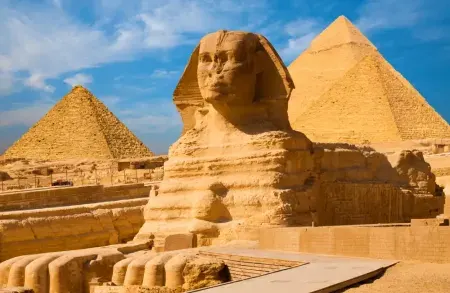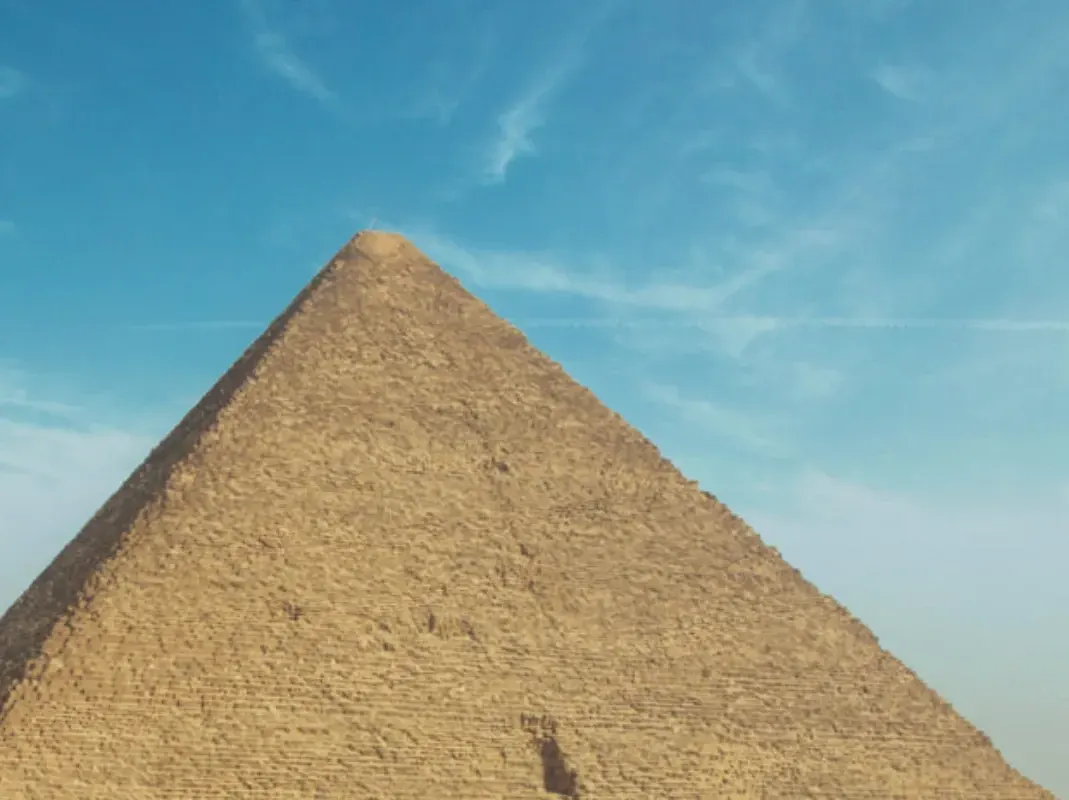
Of all the Pyramids of Giza, the Great Pyramid is the largest structure ever built by any civilisation in human history and the only one of the original Seven Wonders of the Ancient World still standing. It was built for one man: Pharaoh Khufu, second ruler of the Fourth Dynasty, who sat on the throne of Egypt for approximately 23 years between 2589 and 2566 BC. Khufu is the most paradoxical figure in ancient history — the builder of the most famous monument on earth, yet almost nothing is known about him personally. No biography survives. No military campaigns are confirmed. No laws are recorded. We have one small 7.5cm ivory statuette of his face — found at Abydos in 1903 — and the most ambitious construction project in the history of human civilisation.
Pharaoh Khufu — Fast Facts
| Fact | Detail |
|---|---|
| Full name | Khnum-Khufu ("Khnum protects me") — Greek: Cheops |
| Dynasty | 4th Dynasty, Old Kingdom — the age of pyramid building |
| Father | Pharaoh Sneferu — builder of the Bent Pyramid and Red Pyramid at Dahshur |
| Reign | ~2589–2566 BC — approximately 23 years |
| Capital | Memphis (near modern Cairo) — the administrative capital of the Old Kingdom |
| Only surviving portrait | 7.5cm ivory statuette found at Abydos in 1903 — now at the Cairo Egyptian Museum |
| His pyramid | The Great Pyramid of Giza — 146.5m tall · 2.3 million blocks · built in ~20 years |
| Key papyrus | The Wadi el-Jarf papyri (2013) — written by inspector Merer detailing limestone transport to Giza during Khufu’s reign. The oldest papyri ever found. |
The Great Pyramid — Khufu’s Monument in Numbers
| Measurement | Fact |
|---|---|
| Original height | 146.5 metres (now 138.5m — capstone and original white casing removed) |
| Base length | 230.4 metres each side — maximum error of just 4.4cm across 921 metres total |
| Alignment to north | Within 0.05 degrees of true north — more accurate than any modern compass can detect |
| Stone blocks | Estimated 2.3 million · average 2.5 tonnes · largest (King’s Chamber ceiling) 40–80 tonnes |
| Total mass | ~5.75 million tonnes of stone |
| Base area | 53,056 m² — large enough to fit 10 football fields inside the footprint |
| Construction time | ~20 years — one block placed every 2 minutes on average during working hours |
| Workers | ~20,000 paid skilled workers — NOT slaves. Confirmed by workers’ village excavation (1990) |
.jpg?1736459569124)
What We Know About Khufu From the Wadi el-Jarf Papyri
The most significant modern discovery about Khufu came in 2013, when French archaeologist Pierre Tallet discovered the Wadi el-Jarf papyri at a storage facility near the Red Sea — the oldest papyri ever found anywhere in the world. Written during Year 27 of Khufu’s reign by an official named Inspector Merer, they describe in meticulous daily detail how teams transported Tura limestone blocks across the Nile and into a canal system leading to the Giza plateau. They confirm Khufu’s personal involvement in the project, mention his half-sister Meritites as a senior figure in the administration, and give us the first contemporary written account of the pyramid’s construction from the people who actually built it.
Inside the Khufu Pyramid — Can You Enter?
Yes — the Great Pyramid of Khufu is open to visitors. The interior contains three chambers: the King’s Chamber (lined in red Aswan granite, with the original granite sarcophagus), the Queen’s Chamber (limestone, purpose debated) and the unfinished Subterranean Chamber below the pyramid base. The dramatic Grand Gallery — 47 metres long, 8.5 metres high — connects them. In 2017, muon particle scanning discovered a previously unknown large void above the Grand Gallery. Entry requires a separate ticket. Egypt For Travel’s 5-Day Cairo & Luxor program includes complimentary entry inside the Khufu Pyramid. See our companion guide: What Is Inside the Pyramids?
The Khufu Ship — A 4,600-Year-Old Cedar Boat
In 1954, Egyptian archaeologist Kamal el-Mallakh discovered two sealed boat pits beside the Great Pyramid. The first contained a dismantled cedar boat in 1,224 pieces — 43.4 metres long, made from Lebanese cedar with papyrus rope lashings and no nails or pegs. Reassembled over 14 years, it is now displayed in its own building within the Giza complex: the Khufu Boat Museum. A second boat pit was opened in 1987 and confirmed to contain a second dismantled boat; it has not yet been fully excavated. The purpose of the boats — whether solar barques for the pharaoh’s celestial journey, or actual river boats used during his lifetime — is still debated by Egyptologists.
Khufu’s Family — The Pyramid Builders
| Person | Relation | Their Pyramid |
|---|---|---|
| Sneferu | Father | Bent Pyramid + Red Pyramid at Dahshur |
| Khufu | — | Great Pyramid of Giza — largest pyramid ever built |
| Djedefre | Son (ruled briefly) | Abu Rawash pyramid (mostly destroyed) |
| Khafre | Son | Second Giza pyramid · built the Great Sphinx |
| Menkaure | Grandson | Third Giza pyramid — smallest of the three |
Visit the Great Pyramid With Egypt For Travel
| Program | Pyramid Interior | From |
|---|---|---|
| 5 Days Cairo & Luxor | ✅ Complimentary Khufu entry | $749 |
| Cairo 3 Days | Optional add-on | $349 |
| 7-Night Egypt from USA | Optional add-on | $1,599 |
| 4 Days Egypt & Jordan | Cairo Day 1 includes Pyramids | $999 |
WhatsApp: +20 155 555 2466 · ETA Category A Licence No. 1947
Frequently Asked Questions
Who was Pharaoh Khufu?
Khufu (Greek: Cheops) was the second pharaoh of the 4th Dynasty, ruling Egypt from approximately 2589 to 2566 BC. He was the son of Pharaoh Sneferu and the builder of the Great Pyramid of Giza — the largest single building ever constructed by any human civilisation and the only surviving Wonder of the Ancient World. Despite his monumental legacy, very little is known about Khufu personally: the only confirmed portrait is a 7.5cm ivory statuette. The most detailed contemporary record of his reign comes from the Wadi el-Jarf papyri, discovered in 2013 — the oldest papyri ever found.
How tall is the Great Pyramid of Khufu?
The Great Pyramid of Khufu originally stood 146.5 metres (480.6 feet) tall, making it the tallest structure in the world for approximately 3,800 years (until Lincoln Cathedral in England exceeded it in 1311 AD). Today it stands 138.5 metres — the missing 8 metres consisted of the original white Tura limestone casing (removed in the medieval period for Cairo building projects) and the gilded capstone (lost in antiquity). The base covers 53,056 m² with each side measuring 230.4 metres, with a maximum error of just 4.4cm across all four sides.
How long did it take to build the Great Pyramid?
Approximately 20 years, based on the length of Khufu’s reign and the evidence from administrative records including the Wadi el-Jarf papyri. With 2.3 million blocks to place, this works out to an average of one block placed every 2 minutes during working hours — a rate that modern engineering simulations confirm is achievable with 20,000 organised workers using the ramp, sledge and canal technology the ancient Egyptians possessed. For the full construction story, see our guide: How Were the Pyramids Built?
Can you go inside the Khufu Pyramid?
Yes — the Great Pyramid of Khufu is open to visitors daily. A narrow ascending corridor leads to the Grand Gallery and the King’s Chamber with its red granite sarcophagus. Entry requires a separate ticket (~700 EGP / ~$14 USD). The passage requires sustained crouching and is not suitable for visitors with severe claustrophobia or significant mobility limitations. Egypt For Travel’s 5-Day Cairo & Luxor program ($749) includes complimentary Khufu Pyramid interior entry. See the full guide: What Is Inside the Pyramids?