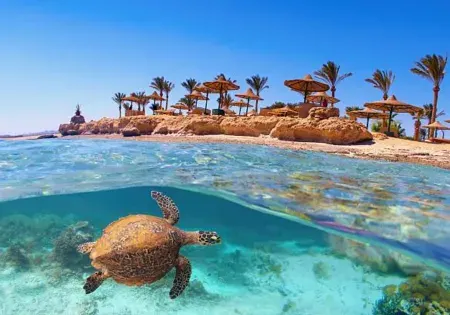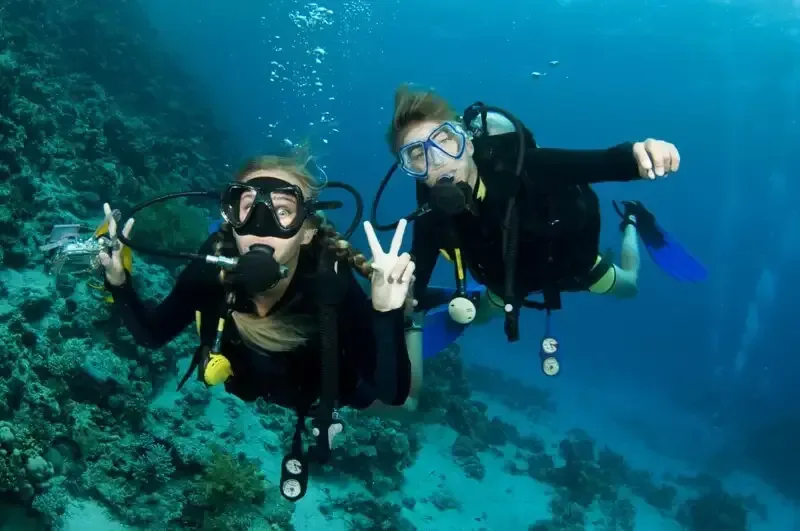
At the very tip of the Sinai Peninsula, where the triangular landmass of Sinai narrows to a rocky headland and the Red Sea divides into the Gulf of Suez to the west and the Gulf of Aqaba to the east, something extraordinary happens underwater. The two gulfs have entirely different depths, temperatures, and current patterns — the Gulf of Suez is shallow and warm, the Gulf of Aqaba is deep and cold — and where they meet at Ras Mohamed, their collision creates an upwelling of nutrients that has sustained one of the most biodiverse marine ecosystems anywhere on the planet for millions of years. Ancient coral reef systems, some of them among the oldest in the Red Sea, line the headland in formations of staggering complexity. The water clarity exceeds 30 metres on calm days. The fish life is so dense that in some locations you cannot see the reef wall behind the fish in front of it.
Ras Mohamed was designated Egypt's first national park in 1983, and its marine and terrestrial ecosystems are protected under Egyptian law. The reserve covers 480 square kilometres of land and sea — including not just the reef systems of the headland but the mangrove channels, sandy beaches, desert wadis, and fossilised coral terraces of the interior. For divers, it is a pilgrimage. For snorkellers, it is the best reef-accessible site in the entire Red Sea region. For day-trippers from Sharm el-Sheikh, it is 45 minutes by road and one of the most compelling natural experiences in Egypt.
Quick Facts: Ras Mohamed Nature Reserve
| Established | 1983 — Egypt's first national park |
| Total area | 480 km² (land and sea combined) |
| Location | Southern tip of the Sinai Peninsula — 12 km from Sharm el-Sheikh by road (45 min) |
| Marine life | Over 1,000 fish species · 200+ coral species · sea turtles · dolphins · occasionally whale sharks |
| Water visibility | Up to 30+ metres on calm days — among the clearest in the Red Sea |
| Top dive sites | Shark Reef · Jolanda Reef · Anemone City · Shark Observatory · The Alternatives |
| Snorkelling sites | Hidden Bay · Anemone City (shallow section) · Mangrove Channel |
| Entrance fee (2026) | ~$8 USD per person (foreigners) — paid at the reserve gate; included in most boat tour packages |
| Opening hours | Daily 08:00–17:00 (land access); dive boats may operate from Sharm from 06:30 |
| Best season | Year-round; October–April ideal (clearer water, cooler temperatures); summer (June–August) hottest but still diveable |
| How to visit | By boat from Sharm el-Sheikh (most popular) · By private car (land sites + snorkelling beaches) · Live-aboard dive boat |
Why Ras Mohamed is Special: The Science Behind the Spectacle
The extraordinary marine biodiversity of Ras Mohamed is not accidental. It is the product of a specific set of geographical and oceanographic conditions that have operated continuously for millions of years and that cannot be replicated elsewhere in the Red Sea.
The Gulf of Aqaba is one of the deepest bodies of water in the world relative to its surface area — reaching depths of over 1,800 metres in places, formed by the same geological rift system that created the African Great Lakes and the Dead Sea. Its waters are deep, cold, and rich in nutrients. The Gulf of Suez, by contrast, is geologically young, shallow, and warm — reaching maximum depths of only about 70 metres. Where the two meet at Ras Mohamed, their different temperature and nutrient profiles create a persistent upwelling zone — cold, nutrient-rich water rising from the depths of the Aqaba gulf and spreading across the reef shallows. This upwelling feeds the phytoplankton that feeds the zooplankton that feeds the coral polyps that built the reef systems over millions of years.
The coral formations at Ras Mohamed include some of the oldest and most structurally complex in the Red Sea. The vertical reef walls that characterise the best dive sites — dropping from the surface to depths of 70–80 metres in a single vertical face — are living structures that have been building continuously for thousands of years, their surface colonised by over 200 species of hard and soft coral.
What no other guide tells you: The name "Ras Mohamed" — Arabic for "Cape of Muhammad" — does not refer to the Prophet Muhammad but to a local Bedouin man named Muhammad who, according to regional tradition, drowned near the headland and whose spirit was believed to guard the cape. The Bedouin of South Sinai have names and stories for almost every geographical feature in the peninsula, and Ras Mohamed's name is part of a dense local geographical mythology that predates tourism by centuries.

The Top Dive Sites at Ras Mohamed
Shark Reef and Jolanda Reef
The most famous dive site in Ras Mohamed — and one of the most celebrated in the entire Red Sea — is the connected system of Shark Reef and Jolanda Reef. Shark Reef is a submerged plateau rising to within 6 metres of the surface on its shallowest point, dropping on its southern face to a vertical wall that plunges to over 80 metres. The wall is covered in enormous sea fans, gorgonian corals, and soft coral formations in colours from orange to purple to white. The fish life — enormous Napoleon wrasse, barracuda in spiralling schools, grey reef sharks patrolling the deeper sections, turtles feeding on the coral plateau — is as dense here as anywhere in the Red Sea.
Jolanda Reef, immediately adjacent, takes its name from a Cypriot cargo ship — the MV Jolanda — that ran aground on the reef in 1980 during a storm and eventually slid off the reef edge in 1985, its cargo of bathroom fixtures (toilets, bathtubs, tiles) now scattered across the deep sand at 30–60 metres depth. The Jolanda cargo dive — visiting the eerily domestic collection of porcelain bathroom fittings scattered across the deep reef — is one of the most unusual and talked-about dive experiences in the Red Sea.
Anemone City
A large coral plateau approximately 5–15 metres deep, Anemone City is named for the extraordinary concentration of giant anemones — some of them over a metre in diameter — that cover its surface, each hosting its own colony of clownfish. This is the best snorkelling site in the reserve: shallow enough for beginners, rich enough to satisfy experienced divers, and consistently accessible regardless of current conditions.
Shark Observatory
A land-accessible plateau on the reserve's western side, Shark Observatory is a raised coral terrace — above the waterline — from which visitors can look down into the clear water below and observe reef sharks, rays, and large pelagic fish moving through the channel between the reef and the shore. It requires no swimming or equipment. This is the best site for non-swimmers or visitors who want a marine wildlife experience without entering the water.
The Mangrove Channel
On the western, Gulf of Suez side of the reserve, a narrow mangrove channel supports one of the northernmost mangrove forests in the world — a fragile ecosystem of grey mangroves growing in the inter-tidal zone between the desert cliffs and the sea. The channel is accessible by kayak or on foot at low tide and supports a distinct community of wading birds, juvenile fish (using the mangrove root systems as nursery habitat), and crustaceans. This is the reserve's most overlooked ecosystem and one of its most biologically significant.

Visitor Types: Which Ras Mohamed Experience Is Right for You?
| Visitor Type | Best Site | How to Access | Equipment Needed |
|---|---|---|---|
| Certified diver | Shark Reef + Jolanda Reef | Dive boat from Sharm (full day) | Open water certification minimum; Advanced recommended |
| Snorkeller | Anemone City · Hidden Bay | Boat trip or private car to Hidden Bay beach | Mask, snorkel, fins — available to hire in Sharm |
| Non-swimmer | Shark Observatory · Mangrove Channel walk | Private car to reserve land sites | None — land-based experience only |
| Family with children | Hidden Bay beach · Anemone City shallow | Boat trip or private car | Life jackets available; child snorkel sets in Sharm |
| Photographer | Shark Reef wall · Jolanda cargo · Anemone City | Dive boat; underwater housing essential | Underwater camera housing; wide angle lens |
| Nature / wildlife visitor | Mangrove Channel · Shark Observatory · interior desert | Private car through reserve | Binoculars for birds; walking shoes |
Practical Visitor Guide — Ras Mohamed
| Detail | Information |
|---|---|
| Entrance fee (2026) | ~$5 USD per person (foreigners) — paid at gate; usually included in organised boat tours |
| Distance from Sharm | 12 km by road — 45 minutes; or 30–45 minutes by boat |
| Best months | October–April — water temperature 22–26°C, excellent visibility; June–August hottest (35°C+) but still good diving |
| Water temperature | Winter: 22–24°C (3mm wetsuit recommended) · Summer: 27–29°C (shorty or swimsuit) |
| Camping | Permitted in designated areas with advance permit from the reserve authority — a remarkable experience under the Sinai stars |
| Rules | No touching coral · No collecting shells or marine life · No fishing · No motorised watersports except in designated zones · No littering |
| Sinai visa note | Ras Mohamed is outside the Sinai-only free zone — a full Egyptian visa ($25 on arrival) is required, not just the Sinai stamp |
Combining Ras Mohamed with Sharm el-Sheikh
Ras Mohamed is the natural complement to a stay in Sharm el-Sheikh — the resort city 12 km to the north that serves as the gateway to South Sinai. While Sharm's own reef sites (Naama Bay, Tiran Island, the SS Thistlegorm wreck) are world-class in their own right, Ras Mohamed offers something different: a protected reserve with the most pristine reef systems in the region, accessible on a half-day boat trip, a full-day dive expedition, or a self-drive day through the reserve's land sites.
Egypt For Travel's 11-Day All-Inclusive Egypt package includes Sharm el-Sheikh with time for a Ras Mohamed excursion. Contact us via WhatsApp to add a private Ras Mohamed boat day to any Sharm programme.
Frequently Asked Questions — Ras Mohamed Nature Reserve
Do I need a visa to visit Ras Mohamed?
Yes — a full Egyptian visa is required. Ras Mohamed is located outside the Sinai-only free zone that covers Sharm el-Sheikh, Dahab, Nuweiba, and Taba. Visitors who entered Egypt on a Sinai-only entry stamp (free at Sharm airport) will need a full Egyptian visa ($25 on arrival at any international airport) to enter the reserve. Most organised boat tours include this in their briefing — confirm with your operator before booking.
What is the entrance fee for Ras Mohamed?
The entrance fee is approximately $5 USD per person for foreign visitors, paid at the reserve gate. This fee is almost always included in the price of organised boat tours and dive packages from Sharm el-Sheikh.
Is Ras Mohamed suitable for non-divers?
Yes — Ras Mohamed offers excellent experiences for snorkellers (Anemone City, Hidden Bay), non-swimmers (Shark Observatory, Mangrove Channel walk, desert interior), and families with children (Hidden Bay beach, shallow reef sections). A private car gives access to the land sites; a boat trip covers the best snorkelling reefs.
Are there sharks at Ras Mohamed?
Yes — grey reef sharks, whitetip reef sharks, and occasionally hammerhead sharks are regularly encountered at the deeper sites, particularly Shark Reef. These are not aggressive species; encounters are the highlight of many divers' visits. Whale sharks are occasionally seen seasonally. The name "Shark Reef" refers to the resident grey reef shark population, not to dangerous conditions.
What is the best time of year to visit Ras Mohamed?
The reserve is rewarding year-round. October to April offers the best combination of water clarity, comfortable air temperatures (20–28°C), and marine wildlife encounters. June to August is very hot on land (35°C+) but water temperatures are warm and comfortable, and the summer months see excellent pelagic activity. March to May is peak season for hammerhead sharks at nearby Tiran.
Can I camp at Ras Mohamed?
Yes — camping is permitted in designated areas within the reserve with an advance permit from the reserve authority. Camping at Ras Mohamed under the Sinai sky, with the sound of the Red Sea and no light pollution, is one of Egypt's most extraordinary experiences. Contact Egypt For Travel for assistance arranging the permit and equipment.
Visit Ras Mohamed Nature Reserve as part of an Egypt For Travel Sharm el-Sheikh programme — browse our 11-Day All-Inclusive Egypt package from $1,799. Private guide · Snorkelling & dive excursions available · All transfers included. WhatsApp: +20 155 555 2466. ETA Licence No. 1947.