The ancient Egyptians understood time as cyclical rather than linear — the universe did not move toward a destination but rotated through a perpetual round of renewal and return. Every year the Nile flooded and receded, every year the crops grew and were harvested, every year the sun died at sunset and was reborn at dawn, every year the gods processed through their sacred landscapes and returned to their temples renewed. The festival calendar of ancient Egypt was the human participation in this cosmic cycle — the rituals, processions, and celebrations through which people collaborated with the gods in maintaining the universe's ordered functioning. Without the festivals, the priests and theologians believed, the universe would falter. With them, Egypt flourished.
The Egyptian festival calendar was complex and regionally variable — different temples had different festival schedules, and the calendar changed over time as dynasties rose and fell. What follows covers the major national festivals of the New Kingdom (c. 1550–1069 BC), the period from which the most detailed records survive, and explains how each festival worked, what it meant, and where you can still see its legacy in Egypt today.
The Ancient Egyptian Festival Calendar — Key Festivals
| Festival | When (Egyptian season) | Duration | Location |
|---|---|---|---|
| Wepet-Renpet (New Year) | First day of Akhet (inundation) | 1 day + 5 epagomenal days | Throughout Egypt |
| Opet Festival | 2nd month of Akhet | 11–27 days | Karnak → Luxor Temple, Thebes |
| Sokar Festival | 4th month of Akhet | 6 days | Memphis and royal necropolises |
| Beautiful Feast of the Valley | 2nd month of Peret | ~1 day + festival days | Karnak → West Bank, Thebes |
| Min Festival | 1st month of Shemu (harvest) | Several days | Luxor region · Medinet Habu |
| Wadi Festival | Lunar calendar — varies | 1–2 days | West Bank, Thebes |
| Sed Festival (Heb-Sed) | After 30 years of reign · then every 3 years | Several days | Royal capital (usually Memphis or Thebes) |
| Osiris Mystery Festivals | 4th month of Akhet (Khoiak) | Several weeks | Abydos · Busiris · Philae |
| Hathor Festival (Reunion) | New Year period | Several days (river journey) | Dendera → Edfu (by Nile) |
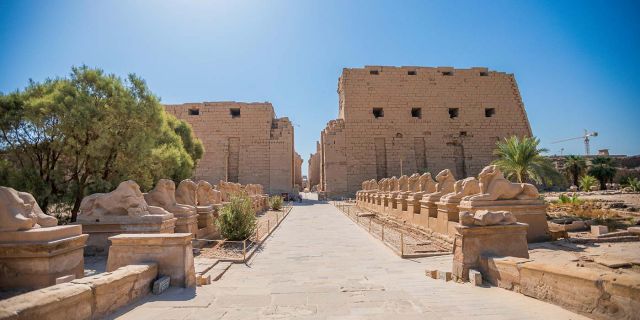
The sphinx avenue between Karnak and Luxor Temple — built to serve as the processional route of the Opet Festival, now restored and walkable for modern visitors.
The Major Festivals in Detail
1. The Opet Festival: Egypt's Greatest Annual Celebration
The Opet Festival was the most important annual religious celebration in the New Kingdom — a spectacular procession of the sacred barques of the Theban Triad (Amun, Mut, and Khonsu) from Karnak Temple to Luxor Temple along a 3-kilometre sphinx-lined avenue. The festival's purpose was the renewal of the pharaoh's divine power through a private ceremony in Luxor Temple's innermost sanctuary. It lasted up to 27 days at its height and included massive public food and beer distribution. The Colonnade Hall reliefs at Luxor Temple provide the most detailed surviving record. See our complete Opet Festival guide for the full story.
2. The Beautiful Feast of the Valley
The Beautiful Feast of the Valley (Heb Nefer en Inet) was one of the most emotionally resonant festivals in the Egyptian calendar — and one of the most unusual. During this festival, which occurred in the second month of Peret (the growing season), the sacred barque of Amun crossed the Nile from the East Bank to the West Bank — from the world of the living to the world of the dead — and processed through the royal mortuary temples and tombs of the Theban necropolis.
The remarkable aspect of this festival was what ordinary Egyptians did during it: they visited the tombs of their own ancestors in the West Bank cemeteries, bringing food, flowers, and offerings, spending the night in or beside the tombs in a mass communion with the dead. The event was simultaneously a religious pilgrimage, a family gathering, a feast, and a remembrance — the closest equivalent in ancient Egypt to the Day of the Dead observances of modern Mexico or the Qingming Festival of China. The evidence suggests that in the Theban region, the Beautiful Feast of the Valley was one of the most widely observed and emotionally significant events of the year for ordinary people, not just the royal and priestly elite.
What no other guide tells you: Some tomb inscriptions from the New Kingdom describe families bringing flowers, bread, beer, and roasted meats to their ancestors' tombs and dining there — sometimes staying overnight. The painted tomb walls served as the backdrop for this family gathering; the images of the deceased watching over the living feast were the theological expression of what the Egyptians believed was actually happening: the dead were present, the boundary between the two worlds temporarily dissolved by the festival.
3. The Sed Festival (Heb-Sed): The Royal Jubilee
The Sed Festival — also called Heb-Sed — was the most important ceremony in the royal religious calendar: the pharaoh's jubilee, traditionally celebrated after 30 years of reign and then every 3 years thereafter. Its central ritual involved the pharaoh physically running between boundary markers set in a rectangular course — proving his continued fitness to rule by demonstrating that he still had the physical vigour of a young king. He also performed ritual acts of archery, handling of implements, and enthronement that re-enacted his original coronation.
The theological purpose was the renewal of the pharaoh's divine power — his ka (spiritual energy) was replenished by the ceremony, ensuring his continued fitness to maintain Ma'at (cosmic order). Several pharaohs celebrated Sed Festivals prematurely — Amenhotep III and Ramesses II both celebrated them earlier than the traditional 30-year mark — suggesting the ritual had become as much a political statement as a physical demonstration. The Heb-Sed court at Saqqara — where Djoser built a permanent stage set for the eternal performance of this ceremony — is the oldest surviving physical record of the festival.
4. The Min Festival: Celebrating the Harvest
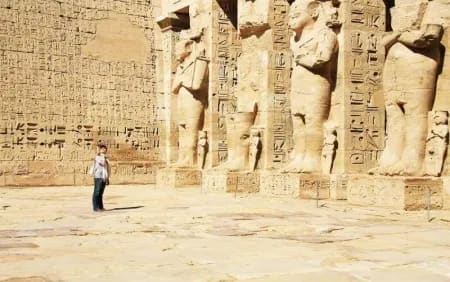
The Min Festival celebrated the harvest and the god Min — a deity of fertility, sexuality, and agricultural abundance, typically depicted with an erect phallus and a raised flail. The festival occurred at the beginning of the harvest season (Shemu) and combined agricultural thanksgiving with royal renewal: the pharaoh ritually cut the first sheaf of grain and offered it to Min, the harvest was blessed, and white lettuce (considered an aphrodisiac and sacred to Min) was distributed. The reliefs at Medinet Habu provide exceptional documentation of the Min Festival as celebrated by Ramesses III.
5. The Hathor Reunion Festival: A Nile Journey Between Gods
One of the most romantic festivals in the Egyptian calendar — the annual Reunion of Hathor and Horus — involved the sacred barque of the goddess Hathor travelling by river from her temple at Dendera southward to the temple of Horus at Edfu — a journey of approximately 200 km by water. The voyage took several weeks, with the barque stopping at temples along the way for rituals and offerings. At Edfu, Hathor and Horus were symbolically reunited in a sacred marriage ceremony — the hieros gamos — after which Hathor returned to Dendera. The festival celebrated divine love, the union of complementary cosmic principles, and the fertility that flowed from that union. The reliefs at both Edfu and Dendera temples document this festival in detail.
6. The Osiris Mysteries at Abydos
The most theologically profound of all Egyptian festivals were the Osiris Mystery Plays held annually at Abydos — the sacred city of Osiris, god of death and resurrection, in Upper Egypt. These festivals dramatically re-enacted the myth of Osiris: his murder by his brother Set, the dismemberment and scattering of his body, the reassembly of his body by Isis, and his resurrection as the ruler of the dead. The performances involved sacred floats on the Abydos lake, ritual combat between actors playing Set and Horus, and the dramatic re-enactment of Osiris's burial and resurrection in a sacred enclosure called the Neshmet barque sanctuary.
These mystery plays are the closest ancient Egypt came to dramatic performance in a theatre — and they are the direct predecessors of the Greek Eleusinian Mysteries and, some scholars argue, elements of early Christian Easter liturgy. The Temple of Seti I at Abydos — which contains the most exquisite painted reliefs in any Egyptian temple — was built specifically to serve as the ceremonial centre of the Osiris cult at Abydos and to host these festivals.
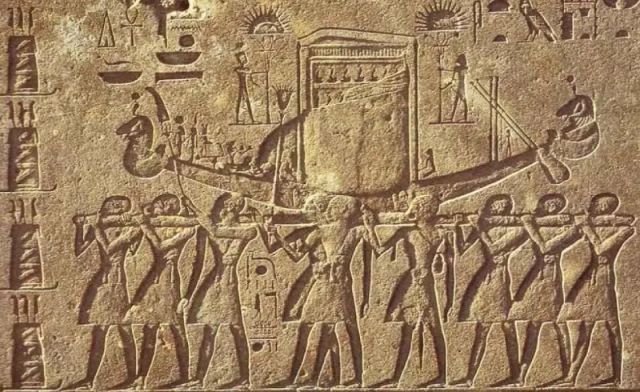
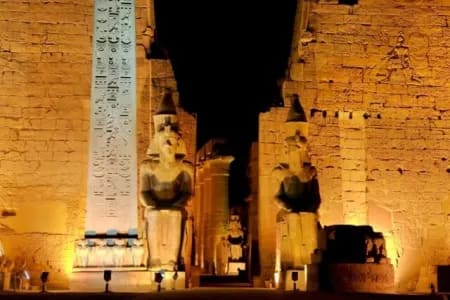
The Opet Festival reliefs at Luxor Temple — the most detailed surviving record of an ancient Egyptian festival, carved under Tutankhamun and completed by Horemheb.
Where to See Festival Legacy Sites Today
| Festival | Where to See Its Legacy | What to Look For |
|---|---|---|
| Opet Festival | Luxor Temple · Karnak Temple · Avenue of Sphinxes | Colonnade Hall reliefs at Luxor Temple (most detailed record) · Barque sanctuaries at Karnak · Walk the sphinx avenue |
| Sed Festival | Saqqara (Heb-Sed court) · Karnak (Festival Hall of Thutmose III) | The dummy shrines of the Heb-Sed court at Saqqara · Thutmose III's botanical garden reliefs at Karnak |
| Beautiful Feast of the Valley | Theban West Bank tombs · Deir el-Medina | Tomb paintings showing festival scenes · Funerary bouquets and offering scenes |
| Min Festival | Medinet Habu Temple | Outer wall reliefs of Ramesses III's Min Festival — most detailed surviving record |
| Hathor Reunion | Dendera Temple · Edfu Temple | Pronaos reliefs at Edfu · Festival scenes at Dendera · The river route itself (now a Nile cruise) |
| Osiris Mysteries | Temple of Seti I at Abydos | The finest painted reliefs in any Egyptian temple · The Abydos King List · The Osireion |
Frequently Asked Questions — Ancient Egyptian Festivals
How many festivals did ancient Egypt have?
The ancient Egyptian festival calendar included hundreds of festivals throughout the year — some national, some regional, some specific to individual temples. The Papyrus Sallier IV (a New Kingdom administrative text) lists 65 feast days and festivals in a single year. The temples at Karnak and Medinet Habu preserve detailed festival calendars carved on their walls listing the specific days, ritual requirements, and offerings for dozens of annual celebrations.
What was the most important festival in ancient Egypt?
During the New Kingdom, the Opet Festival in Thebes (Luxor) was the most important state religious festival — combining the renewal of the pharaoh's divine power with a massive public celebration lasting up to 27 days. At Memphis, the Sokar Festival — honouring the funerary god Sokar — held equivalent importance. The Osiris Mysteries at Abydos were the most theologically profound.
Did ordinary Egyptians participate in festivals?
Yes — the great festivals were explicitly public events. During the Opet Festival, the state distributed food and beer to the entire population of Thebes. During the Beautiful Feast of the Valley, families spent the night in the tombs of their ancestors. During the Min Festival, the harvest celebration involved the whole agricultural community. The festivals were not exclusive religious rituals — they were the primary means through which ordinary Egyptians experienced the divine.
Where can I see ancient Egyptian festival reliefs today?
The best surviving festival reliefs are at: Luxor Temple (Opet Festival, Colonnade Hall) · Medinet Habu (Min Festival, Ramesses III) · Dendera Temple (New Year ceremony, Hathor reunion) · Karnak Temple (multiple festival records).
Visit the festival temples of ancient Egypt with Egypt For Travel — browse Egypt tour packages from $749 per person. Private Egyptologist guide who explains the festivals at the temples where they happened. WhatsApp: +20 155 555 2466. ETA Licence No. 1947.