• +201555552466
  • [email protected]
USD ($)
  • USD ($)
  • EUR (€)
  • GBP (£)
English
  • English
  • Español
Egypt For Travel
USD ($)
  • USD ($)
  • EUR (€)
  • GBP (£)
Egypt
  • English
  • Español
  • Home
  • Egypt Tours 2026
    • Egypt Travel Packages
    • Nile Cruises
    • Egypt Multi-Country Trips
    • Egypt Day Tours
  • Jordan
    • Trips to Jordan
    • Jordan Day Tours
    • Jordan Combined Tours
  • Saudi Tours
    • Saudi Tours
    • Saudi Day Tours
    • Saudi Combined Tours
  • Morocco
    • Morocco Tours
    • Morocco Day Tours
    • Morocco Combined Tours
  • Blog
    • Jordan Tourist
    • Morocco Tourist
    • Saudi Tourist
    • Egypt Tourist
  • About
    • WHY US
    • Terms and Conditions
    • Responsible Travel
    • About Us
Inquire
  • Home
  • Egypt Tours 2026
  • Egypt Day Tours 2026 — Private Guided Tours from $55
  • Private Felucca Trip on the Nile in Cairo — Sunset Sailing

Private Felucca Trip on the Nile in Cairo — Sunset Sailing

Cairo

(1,186 Reviews)
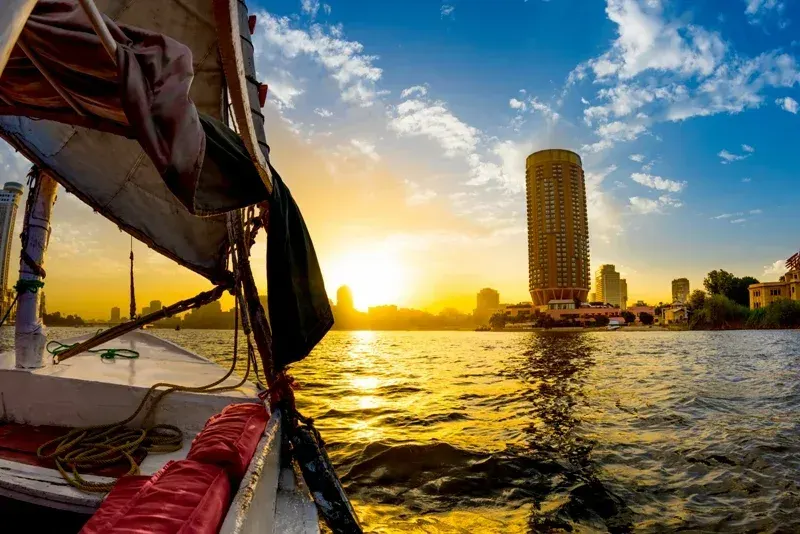
Felucca lateen sail Cairo Nile — traditional boat propelled only by the wind
Felucca trip Cairo Nile at sunset — private traditional Egyptian sailing boat
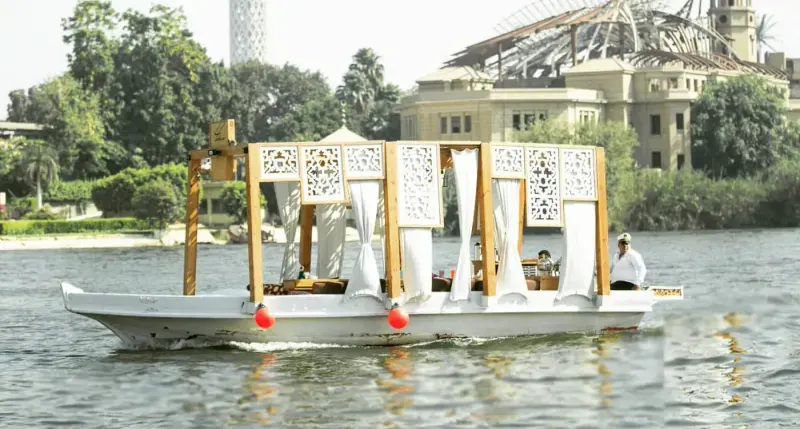
Mint tea on the Nile — included in Egypt For Travel private felucca trip Cairo
Felucca lateen sail Cairo Nile — traditional boat propelled only by the wind
Felucca trip Cairo Nile at sunset — private traditional Egyptian sailing boat
Mint tea on the Nile — included in Egypt For Travel private felucca trip Cairo

Overview

The felucca — a traditional Egyptian wooden sailing boat, propelled entirely by the wind with no engine, its lateen sail catching the Nile breeze — is one of the oldest watercraft still in regular use anywhere on Earth. Feluccas have sailed the Nile for at least 3,000 years; the form of the boat has changed remarkably little from the vessels depicted in ancient Egyptian tomb paintings. Egypt For Travel's Private Felucca Trip on the Nile in Cairo offers 2 hours on a private felucca — just your group, the captain, and the Nile — sailing between the islands of Gezira and Rhoda, watching Cairo from the water as the sun sets over the West Bank.

The Experience

Your private vehicle transfers you to the felucca dock on the Cairo Corniche — your Egypt For Travel guide accompanying you throughout. The felucca captain — who knows the Nile's winds and currents as intimately as a taxi driver knows the streets — unfurls the sail and the boat moves into the current. With no engine, the only sounds are the water against the hull, the creak of the rigging, and the city drifting past on both banks.

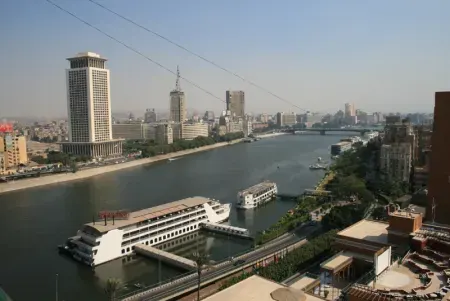
The route follows the Nile between Gezira Island (with the Cairo Tower and the Opera House visible above the treeline) and the East Bank corniche (with the Semiramis and Four Seasons hotels rising above the river) southward past Rhoda Island and the Nilometer — the ancient stone structure used to measure the Nile flood since pharaonic times, the oldest functioning scientific instrument in the world. Your guide provides context as each landmark comes into view.

At sunset, the Nile turns golden; the Cairo bridges glow; the minarets on both banks catch the last light. A traditional Egyptian mint tea is served on board. This is one of the most peaceful experiences available in one of the world's most energetic cities.

Detail Information
Duration 2 hours on water · ~3.5 hours total including transfers
Capacity Private boat — just your group (typically 2–8 people)
Best timing 1 hour before sunset — arrive on Nile at golden hour
Route Gezira Island · East Bank Corniche · Rhoda Island · Nilometer
On board Egyptian mint tea · cushioned seating · open deck
Ideal for Couples · families · anyone wanting peace in Cairo

Combine with our Cairo City Tour (morning) and Nile Dinner Cruise (evening) for a complete Nile day programme.

Duration: 3.5 hours Type: Private Tour Run: Everyday

Included

  • Private licensed guide
  • Private vehicle — hotel pickup and drop-off
  • Private felucca (2 hours) with experienced captain
  • Egyptian mint tea on board
  • Bottled water
  • All taxes and service charges

Excluded

  • Food (the felucca is a sailing experience, not a dinner cruise — see Nile Dinner Cruise for a dining option)
  • Tips for felucca captain (customary — 150–200 EGP)
  • Personal spending

Itinerary:

~1 hr before sunset — Hotel pickup
Corniche dock — Board felucca · captain briefing · cast off
2 hours — Sailing: Gezira · East Bank · Rhoda · Nilometer · sunset on the Nile · mint tea served
Return to dock — Disembark · transfer to hotel or onward to dinner cruise

Prices:


Prices
2-3 Persons
$ 55 Per Person
4-6 Persons
$ 45 Per Person
7-9 Persons
$ 35 Per Person
10+
$ 25 Per Person

Notes:

Prices Policy

All prices are per person based on double occupancy sharing. Single travellers pay the same per-person rate. Children aged 2–11 receive discounted pricing — contact us for the current children's rate. The from-$60 price is inclusive of guide, vehicle, and entrance fees as listed in Inclusions above.

Departure Tips

We recommend wearing comfortable, lightweight clothing and closed-toe walking shoes. A hat, sunglasses, and sunscreen (SPF 50+) are essential — the Giza Plateau and Saqqara are exposed desert sites with no shade. Bring a small bag for personal items. Egypt For Travel's vehicle will collect you from your hotel lobby or cruise port at the agreed time — please be ready 5 minutes early.

Children Policy

Children aged 0–1: free of charge (no seat). Children aged 2–11: discounted rate — please contact us for current pricing. Children aged 12 and above: adult rate applies. The Pyramids and Saqqara sites involve walking on uneven terrain — sturdy footwear and sun protection are essential for children. The Great Pyramid interior is not recommended for young children (steep, confined passage).

Payment Policy

A deposit of 25% of the total tour cost is required to confirm your booking. The remaining 75% is due before or on the day of the tour. During peak season (October–April) and for groups of 6 or more, a deposit of 50% is required at booking. Payment accepted by bank transfer, credit card, or cash in USD, EUR, or EGP.

Installment Policy

Flexible payment installments are available on request for group bookings and multi-day programmes. Please contact Egypt For Travel via WhatsApp (+20 155 555 2466) or email to discuss installment arrangements before confirming your booking.

Tipping Guide

Tipping is customary in Egypt but entirely at your discretion. Suggested guidelines: Egyptologist guide — $10–15 per day · Driver — $5–8 per day. Tips are paid directly to the guide and driver at the end of the tour in USD, EUR, or EGP. Egypt For Travel never adds gratuities to invoices or applies any tipping pressure.

Cancellation Policy

61+ days before departure: 10% cancellation fee
31–60 days before departure: 20% cancellation fee
15–30 days before departure: 50% cancellation fee
1–14 days before departure: 100% cancellation fee (no refund)
All cancellations must be submitted in writing to Egypt For Travel. Egypt For Travel reserves the right to cancel or modify tours due to circumstances beyond our control (weather, site closures, force majeure); in such cases a full refund or alternative arrangement will be offered.
Check Availability

Related Tours

Half Day

Grand Egyptian Museum Private Tour — The Complete GEM Experience

(150)

The Grand Egyptian Museum (GEM) — which opened in November 2025 at Giza, adjacent to the Pyramids — is the largest archaeological museum in the world and the most significant cultural opening in Egypt since the Egyptian Museum in 1902. With over 100,000 ancient Egyptian artefacts displayed across 45,000 square metres of gallery space, and the complete 5,398-piece treasure of Tutankhamun exhibited together for the first time in history, the GEM has transformed what it means to experience ancient Egypt in person. Egypt For Travel's Grand Egyptian Museum Private Tour provides the ideal introduction: a licensed Egyptologist guide who knows the museum's layout, collection highlights, and the stories behind the objects — plus the option to combine the GEM with a Pyramids visit on the same day.

About the Grand Egyptian Museum

The Building

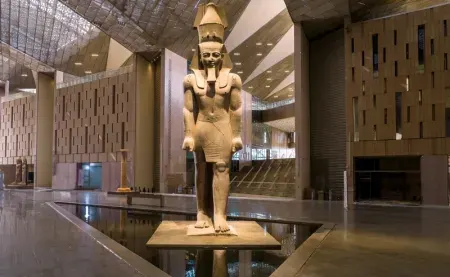
The GEM building — designed by the Dublin-based firm Heneghan Peng Architects and constructed over more than a decade — is itself an extraordinary architectural achievement. The translucent stone facade, through which the Giza Pyramids are visible from inside the museum atrium, creates a visual and conceptual connection between the ancient monuments and the modern collection that houses their legacy. The triangular site covers 50 hectares; the exhibition area alone is 45,000 square metres — more than double the floor area of the Egyptian Museum in Tahrir Square. The entrance atrium features a monumental 12-metre granite statue of Ramesses II, moved piece by piece from Ramses Square in Cairo.

The Tutankhamun Galleries

The centrepiece of the GEM is the complete Tutankhamun collection — all 5,398 objects from the discovery of his tomb (KV62) by Howard Carter in 1922, displayed together in a purpose-built suite of galleries for the first time since they were removed from the tomb over a century ago. The collection includes the iconic golden death mask, the four nested gilded shrine coffins, the golden throne, chariots, calcite canopic jars, model boats, shabtis, clothing, games, food, musical instruments, and thousands of ritual and personal objects — a complete snapshot of royal burial in 1323 BC. Your Egyptologist guide will identify the most significant pieces and explain the discovery story that captivated the world in 1922.

The Royal Mummies Hall

The GEM's Royal Mummies Hall displays an expanded collection of royal mummies — the preserved remains of Egypt's greatest pharaohs, including Ramesses II (the largest empire-builder in ancient Egyptian history), Seti I (whose mummy is considered the best-preserved royal mummy in the world), and several queens and princes of the New Kingdom. The exhibition uses state-of-the-art display technology to provide CT scan imagery and biographical information alongside each mummy.

The Permanent Galleries

Beyond Tutankhamun, the GEM's permanent galleries are organised by period and theme, covering: the Predynastic and Early Dynastic periods · the Old Kingdom (pyramids and their world) · the Middle Kingdom · the New Kingdom (the empire and its monuments) · the Late Period and Ptolemaic dynasty · and a dedicated gallery for ancient Egyptian daily life — objects of everyday use from all periods that bring the practical reality of living in pharaonic Egypt vividly to life. Your guide will customise the tour to your interests — a focused 3-hour visit or a comprehensive 5-hour experience are both available.

GEM + Pyramids: The Perfect Full Day

The GEM sits at the edge of the Giza Plateau — the Pyramids are visible through the museum's facade and a 5-minute drive away. Egypt For Travel's most popular upgrade combines the GEM with the Pyramids, Sphinx, and Valley Temple in a single full day — experiencing the museum context first, then standing before the actual monuments that produced what you have just seen.

Option Includes Duration
GEM only Grand Egyptian Museum + private guide Half day (4–5 hours)
GEM + Pyramids Grand Egyptian Museum + Giza Pyramids + Sphinx + Valley Temple Full day (8–9 hours)
GEM + Pyramids + Saqqara All of the above + Step Pyramid + Memphis Extended full day (10–11 hours)

$ 75 | Per person

08 Hours

Cairo Islamic & Coptic Day Tour — Al-Muizz Street, Mosques & Ancient Churches

(110)

Cairo contains 1,400 years of Islamic history and 2,000 years of Christian history within walking distance of each other — and this private day tour is the most complete way to experience both. Walking the medieval thoroughfare of Al-Muizz Street, visiting the 9th-century Mosque of Ibn Tulun and the Mamluk masterpiece of Sultan Hassan Mosque, then descending into the ancient Christian quarter of Coptic Cairo to see the churches where the Holy Family sheltered and the crypt where Egypt's oldest congregation still gathers — this is Cairo's greatest cultural journey, with a private licensed guide who understands every layer of the city's extraordinary religious history. From $55 per person, all entrance fees included.

What You Will See

Al-Muizz Street — Cairo's Medieval Spine

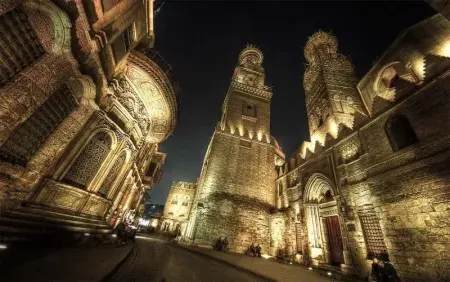
Al-Muizz Street — once called the Street of the Coppersmiths, the main thoroughfare of the Fatimid city founded in 969 AD — is the most concentrated sequence of medieval Islamic architecture anywhere in the world. Your guide will walk you from the Bab el-Futuh (Gate of Conquests, 1087 AD) southward through the historic core: past the Mosque of Al-Hakim (1013 AD), the Mosque-Madrasa of Sultan Barquq (1384 AD), and the Sabil-Kuttab of Abdul Katkhuda — all while the medieval bazaars on either side sell brass, copper, fabric, and spices exactly as they have for 1,000 years.

Mosque of Ibn Tulun

The Mosque of Ibn Tulun (876–879 AD) is the oldest intact mosque in Cairo and one of the architectural wonders of the Islamic world. Its courtyard alone covers 2.5 hectares; the spiral exterior minaret (unique in Cairo, modelled on the Great Mosque of Samarra in Iraq) provides one of the finest panoramic views in Islamic Cairo from its top. The attached Gayer-Anderson Museum — two connected 16th-century Cairene merchant houses with extraordinary interiors — can be included on request.

Sultan Hassan Mosque & Al-Rifai Mosque

At the base of the Saladin Citadel hill, the Sultan Hassan Mosque-Madrasa (1356–1363) is the masterpiece of Mamluk architecture — its 38-metre entrance portal the tallest doorway in the medieval Islamic world, its four vaulted iwans representing the four schools of Sunni Islamic law. Opposite stands the Al-Rifai Mosque (1869–1912) — where Egypt's royal family and the last Shah of Iran are buried — a masterpiece of neo-Mamluk architecture that serves as the architectural bookend to Sultan Hassan's raw Mamluk power.

Old Coptic Cairo

A 15-minute drive brings you to Coptic Cairo — the ancient Christian quarter enclosed within the walls of the Roman Fortress of Babylon (4th century AD). Your tour includes: the Hanging Church (Al-Muallaqah) — suspended above Roman gatehouse towers, its 13th-century carved wooden pulpit a masterpiece of Fatimid-era Coptic craftsmanship · the Church of Abu Serga — built over the crypt where the Holy Family sheltered · the Church of Saint Barbara with its medieval iconostasis · and the Ben Ezra Synagogue — Cairo's oldest synagogue, where the Cairo Geniza manuscript collection was discovered in the 19th century.

Khan El-Khalili Bazaar

The day concludes in Khan El-Khalili — in continuous operation since 1382 AD, the medieval bazaar where gold smiths, spice merchants, papyrus painters, and perfume vendors operate in an atmosphere that has changed remarkably little in 600 years. Your guide will take you to the gold quarter, the spice traders, and the famous El-Fishawi Café — the oldest café in Cairo, which has not closed its doors for over 200 years.

Site Entrance Fee (2026) Highlight
Ibn Tulun Mosque ~220 EGP — included Oldest intact mosque in Cairo · spiral minaret
Sultan Hassan Mosque ~220 EGP — included Masterpiece of Mamluk architecture · 38m portal
Al-Rifai Mosque ~220 EGP — included Royal mausoleum · Shah of Iran's tomb
Coptic Cairo churches Free — included Hanging Church · Abu Serga · Ben Ezra
Al-Muizz Street walk Free 1,000 years of Islamic architecture in one street

$ 55 | Per person

03 Hours

Sunset Camel Ride at the Giza Pyramids — Private Cairo

(70)

There are photographs and there are memories. A camel ride at sunset beside the Giza Pyramids — the golden light turning the limestone colossi from pale cream to deep amber, the desert silent, your silhouette and your camel's silhouette moving across the sand against the backdrop of the only surviving Wonder of the Ancient World — is a memory. This is one of the most requested experiences in Egypt, and Egypt For Travel offers it as a fully private, hassle-free, professionally guided tour with hotel pickup and drop-off, a licensed guide, and absolutely no pressure, no touts, no surprises.

The Experience

Your private vehicle collects you from your Cairo or Giza hotel approximately 2 hours before sunset — the timing adjusted daily to the actual sunset time for your visit date. Your licensed guide escorts you to the south-western approach of the Giza Plateau — the position that gives the most dramatic unobstructed view of all three pyramids — where your camel and its Bedouin handler will be waiting.

A well-trained, healthy camel is provided. Your guide will assist with mounting, walk beside you for the duration of the ride, and — critically — handle all interaction with the camel handlers so you pay what was agreed and nothing more. The ride covers the classic route around the base of the plateau, approaching the panoramic viewpoint where all three pyramids and the Sphinx are simultaneously visible, timing your arrival for the moments when the sun is low and the light is extraordinary. Most rides last 45–60 minutes, with stops for photography at the key viewpoints.

As the sun drops below the horizon and the sky moves through orange into pink, the pyramids take on a quality unlike anything visible in photographs. Your guide will be present throughout — answering questions, providing context, and ensuring your experience is relaxed and memorable rather than rushed and commercial.

Detail Information
Duration Approximately 3 hours total (including transfers) · 45–60 min camel ride
Timing Depart hotel ~2 hours before sunset · timed daily to actual sunset
Route South-western plateau approach · panoramic viewpoint · all three pyramids + Sphinx view
Best combined with Bedouin Dinner at the Pyramids — add dinner after the ride for the perfect evening
Photography tip Golden hour light lasts 30–45 min — your guide knows exactly when and where to position for the best shots

Combine the sunset camel ride with our Cairo Nile Dinner Cruise for a complete evening programme — ride at sunset, dine on the Nile. Contact us via WhatsApp: +20 155 555 2466.

$ 35 | Per person

2.5–3.5 hrs

Quad Bike (ATV) Tour at the Giza Pyramids — Sunrise, Sunset or Any Time

(60)

Most visitors to the Giza Pyramids walk, or take a camel. A growing number choose something more exhilarating: a quad bike (ATV) across the Sahara desert with the pyramids on one side and 4,500 years of history on the other. Egypt For Travel's Quad Bike Tour at the Giza Pyramids is one of the most exciting experiences available in Cairo — and one of the most photographed. You can book for sunrise (coolest, most dramatic light, zero crowds), sunset (golden hour, warmest colours, Instagram-famous), or any time during the day. Our quad bikes are modern, well-maintained, and fully insured; full safety briefing and helmet provided; no previous ATV experience required.

The Experience

Your private vehicle collects you from your hotel and transfers you to the quad bike base station on the western desert plateau adjacent to the Giza Pyramids complex — beyond the tourist area, in the open desert where the sand stretches uninterrupted and the pyramids are visible as a backdrop to your ride. After a full safety briefing (approximately 15 minutes) and helmet fitting, you mount your ATV and the ride begins.

The standard 1-hour ride covers approximately 8–10 km of desert terrain — flat sand sections for confidence building, gentle dune crossings, and approach routes that frame the pyramids as a backdrop to your ride. Your guide leads from the front, setting the pace, and all riders travel together as a group. You will stop at three or four viewpoints for photography — including the famous position where all three pyramids appear perfectly aligned behind your ATV. The 2-hour ride extends the route, includes a desert tea stop with Bedouin hosts, and covers more of the plateau including views toward the horizon with no buildings in sight.

Option Duration Best For Time of Day
1-hour ride 1 hr riding + transfer (~2.5 hrs total) First-timers · add-on to Pyramids day tour Any time
2-hour ride 2 hrs riding + transfer (~3.5 hrs total) Adventure seekers · photographers Sunrise or sunset recommended
Sunrise ride 1 or 2 hrs · departs pre-dawn Photography · cool temperatures · zero crowds 06:00–08:00
Sunset ride 1 or 2 hrs · departs 2 hrs before sunset Golden hour · most dramatic light · romantic ~17:00–19:00 (seasonal)

Add a sunset camel ride before or after the quad bike for the ultimate Giza adventure combination. Contact us via WhatsApp: +20 155 555 2466. ETA Licence No. 1947.

$ 30 | Per person

5 hours evening

Bedouin Dinner & Sunset Camel Ride at the Giza Pyramids — Evening Private Tour

(110)

When the last tour group leaves the Giza Plateau and the vendors pack away their wares, the desert around the pyramids becomes something completely different: quiet, vast, and extraordinarily atmospheric. Egypt For Travel's Bedouin Dinner & Camel Ride at the Pyramids is the most immersive evening experience available in Cairo — combining a sunset camel ride around the pyramid plateau, a traditional Bedouin dinner in a desert camp set up in view of the pyramids, a Tanoura whirling dervish performance, and stargazing in the desert air beyond the city light. This is the evening that visitors remember longest.

The Evening Programme

Phase 1 — Sunset Camel Ride (45–60 min)

Your private vehicle collects you from your hotel approximately 2 hours before sunset. Your camel and Bedouin handler are waiting at the western approach to the plateau. Your licensed guide accompanies you throughout, ensuring the ride is relaxed, safe, and perfectly timed — arriving at the panoramic viewpoint as the sun drops and the pyramids turn from cream to amber to gold. Read the full description of the sunset camel ride here.

Phase 2 — Bedouin Camp & Dinner (2 hours)

After the camel ride, your guide leads you to a traditional Bedouin camp set up in the desert to the west of the Giza complex — low tents, cushions, lanterns, and the smell of charcoal and spiced meat drifting across the sand. The dinner is served communally around a central fire:

Starters: Hummus · baba ghanoush (roasted aubergine dip) · Egyptian salad · ful medames · warm flatbread fresh from the camp fire
Main course: Grilled chicken or lamb · kofta · rice with herbs · roasted vegetables
Dessert: Om Ali (warm Egyptian bread pudding with cream and nuts) · fresh fruit · Egyptian tea and mint
Drinks: Soft drinks and mineral water included · Egyptian mint tea served throughout

Phase 3 — Tanoura Show & Stargazing

After dinner, a Tanoura performer — the Egyptian whirling dervish tradition — performs in the firelit camp, the spinning coloured skirts creating an extraordinary visual spectacle against the desert night. After the performance, your guide will point out the key constellations visible from this position — with the Giza Plateau dark to the east and the open desert dark to the west, the night sky is significantly clearer than within the city. The ancient Egyptians were among the world's most sophisticated astronomers, and standing beside their greatest monuments under the stars they charted is one of Egypt's most powerful experiences.

Phase Experience Duration
Sunset camel ride Camel ride around the Giza Plateau at golden hour 45–60 min
Bedouin dinner Traditional Egyptian and Bedouin food around a campfire ~1.5 hours
Tanoura show Whirling dervish live performance in the desert camp ~30 min
Stargazing Desert sky astronomy with Egyptologist context ~30 min

Book the Bedouin Dinner & Camel Ride with Egypt For Travel — WhatsApp: +20 155 555 2466. ETA Licence No. 1947.

$ 55 | Per person

Full Day (7–8 hrs)

Cairo Museums Day Tour — Egyptian Museum & National Museum of Egyptian Civilisation

(130)

Cairo now has three world-class museums of ancient Egyptian artefacts — and this private day tour covers two of them in a single immersive experience: the Egyptian Museum in Tahrir Square (founded 1902, the original great collection, home of Tutankhamun's treasures) and the National Museum of Egyptian Civilisation (NMEC) in Fustat (opened 2021, home of the Royal Mummies Hall — 22 royal mummies displayed in state-of-the-art conditions in the most comprehensive royal mummies exhibition anywhere). Together they offer the most complete portrait of ancient Egyptian material culture available anywhere on Earth — and a full day with a private Egyptologist guide to interpret it.

Museum 1: The Egyptian Museum, Tahrir Square

The Egyptian Museum — Cairo's original great museum, founded in 1902 by the French Egyptologist Gaston Maspero — houses over 165,000 objects in a grand Neoclassical building on Tahrir Square. Its chaotic, chronological abundance is itself an experience: room after room of statues, sarcophagi, jewellery, papyri, ushabtis, furniture, and weapons from every period of Egyptian history. Your Egyptologist guide navigates with purpose, leading you to the highlights: the Tutankhamun Galleries (5,398 objects including the solid-gold death mask, the golden throne, and the nested shrine coffins), key Old Kingdom statues, and Middle Kingdom masterpieces. Entrance: 300 EGP (included). Time: approximately 2.5 hours.

Museum 2: The National Museum of Egyptian Civilisation (NMEC), Fustat

Opened in April 2021 in the historic district of Fustat (Old Cairo), the NMEC is the most ambitious museum project in Egypt's modern history — a complete narrative of Egyptian civilisation from the prehistoric period to the present day, displayed in a building that incorporates the archaeological remains of ancient Fustat within its architecture. But the NMEC's defining attraction is its Royal Mummies Hall: a purpose-built subterranean gallery displaying 22 royal mummies — including Ramesses II, Ramesses III, Hatshepsut, Thutmose III, Seti I, Amenhotep II, and fifteen others — in individual climate-controlled glass cases with biographical panels, CT scan imagery, and a level of interpretive scholarship unavailable anywhere else.

The transfer of the royal mummies from the Egyptian Museum to the NMEC in April 2021 — a ceremonial procession along the Corniche, each mummy in its own dedicated vehicle, accompanied by an honour guard — was one of the most extraordinary events in modern Egyptian history, broadcast live across Egypt and around the world. Your guide will describe this event and explain what each mummy's CT scan has revealed about their lives and deaths.

Museum Founded Objects Star Attraction Entry Fee
Egyptian Museum 1902 165,000+ Tutankhamun galleries · golden death mask 550 EGP — included
NMEC 2021 50,000+ Royal Mummies Hall — 22 pharaohs ~550 EGP — included

$ 65 | Per person

2.5–3.5 hrs

Sunset Horse Ride at the Giza Pyramids — Private Arabian Horse Experience

(90)

The Arabian horse and the desert have been inseparable in Egypt for 3,000 years — and nowhere is this pairing more extraordinary than at the Giza Pyramids at sunset. Egypt For Travel's Sunset Horse Ride at the Pyramids provides a completely different experience from the standard camel ride: more elegant, more exhilarating, more connected to the desert landscape. Well-trained pure Arabian horses from stables at the foot of the Giza Plateau carry you through the desert at golden hour, the pyramids blazing in the last light, the sand warm beneath the horses' hooves.

The Horses

The stables at Giza maintain a number of pure and cross-bred Arabian horses — a breed developed in the Arabian Peninsula over thousands of years, prized for their endurance, intelligence, and beauty, and historically the horse of the Egyptian cavalry. Your guide will match you to a horse appropriate for your experience level: a calm, gentle ride for beginners; a more spirited mount for experienced riders who want to canter across the open desert. All horses are well-cared-for, regularly vetted, and ridden daily.

The Route

Departing approximately 90 minutes before sunset, your guide leads the ride from the stable at the western base of the plateau through the desert approach track toward the panoramic viewpoint. The route crosses open sand with the three pyramids as a backdrop on your right, the desert extending to the horizon on your left. At the panoramic viewpoint, you will stop for photography — the horses, the pyramids, and the sunset sky creating one of the most photographed images in Egypt. Experienced riders can request a canter section on the approach; all rides proceed at the pace comfortable for the group.

Option Duration Experience Required
Beginner ride 45 min — walk only None — guide leads horse throughout
Intermediate ride 1 hour — walk and trot Some riding experience preferred
Advanced ride 1–2 hours — walk, trot, canter Confident rider — must communicate experience at booking

$ 45 | Per person

Half Day (4–5 hrs)

Cairo City Tour — Cairo Tower, Koshari, Zamalek & Local Life

(90)

Most Cairo day tours take you to the Pyramids, the Egyptian Museum, the Citadel, and the bazaar — all extraordinary, all essential. But Cairo itself — the living city of 22 million, the largest city in Africa and the Arab world, with its art deco apartment blocks, its street food culture, its waterfront corniche, its islands, its noise and energy and warmth — rarely features in a structured tour. Egypt For Travel's Cairo City Tour corrects this: a private half-day or full-day experience that shows you Cairo as it actually is, beyond the monuments, with a guide who was born and raised in this city and loves it.

The Cairo Tower — 187 Metres Above Africa's Largest City

Built in 1961 on Gezira Island in the middle of the Nile, the Cairo Tower (Burg al-Qahira) is a 187-metre concrete tower whose top observation deck provides the most comprehensive 360° view of Cairo available to the public: the Nile running north and south, the Giza Pyramids visible to the west on a clear day, the minarets of Islamic Cairo to the east, the Heliopolis suburbs to the north-east, and the desert escarpment of the Moqattam hills to the south-east. Your guide will identify every landmark and explain how the city grew from its founding by the Fatimids in 969 AD to the metropolitan region of today. The revolving restaurant at the top is available for a meal with this panoramic view (not included — own cost). Entrance: ~200 EGP (included).

Koshari at Abu Tarek — Egypt's Soul Food

No visit to Cairo is complete without eating koshari — Egypt's national dish, and one of the great street foods of the world. A layered combination of rice, lentils, macaroni, chickpeas, crispy fried onions, and tomato sauce (with vinegar and chilli sauce on the side), koshari is filling, cheap, delicious, and eaten by every Egyptian regardless of class or neighbourhood. The most famous koshari restaurant in Cairo — in the world, arguably — is Abu Tarek on Champollion Street near Tahrir Square, which has been serving the dish continuously since 1950. Your guide will take you there for lunch, order like a local, and explain the dish's origins (a 19th-century fusion of Indian, Italian, and Egyptian culinary traditions) while you eat.

Zamalek — Cairo's Island Neighbourhood

Zamalek — the northern portion of Gezira Island, connected to the East Bank by bridges — is Cairo's most beautiful neighbourhood: tree-lined streets, art deco apartment buildings from the 1930s and 40s, embassies, galleries, and the best independent cafés and restaurants in the city. Your guide will walk you through Zamalek's streets, pointing out the architectural gems, explaining the neighbourhood's history as the European quarter of colonial Cairo, and stopping at a café for tea or coffee. The Cairo Opera House complex — on the southern end of Gezira Island — and the adjacent Museum of Modern Egyptian Art can be included on request.

The Corniche & Nile Walk

The Corniche el-Nil — the riverside road and promenade running along the East Bank — is Cairo's social spine: the place where Cairenes walk, sit, eat corn from vendors, watch the feluccas on the water, and simply exist in the open air. A walk along a section of the Corniche with your guide — explaining the view, the city's relationship to the river, and the daily life happening around you — is one of the most pleasurable and grounding experiences Cairo offers. It is also free.

Stop Experience Time
Cairo Tower 360° panorama of Cairo — 22 million people at your feet ~45 min
Abu Tarek Koshari lunch at Cairo's most famous restaurant since 1950 ~45 min
Zamalek walk Art deco streets · cafés · embassies · Cairo's most beautiful neighbourhood ~1 hour
Corniche walk Nile promenade · vendors · feluccas · real Cairo life ~30 min
Optional add-ons Cairo Opera House · Museum of Modern Art · downtown art deco walk · juice bar stop By request

$ 45 | Per person

Evening (4 hours including transfers)

Cairo Nile Dinner Cruise — Buffet Dinner, Belly Dancing & Tanoura Show

(90)

As the sun sets over Cairo and the minarets begin to glow in the evening light, the Nile transforms. The commuter traffic on the corniche thins; feluccas return to their moorings; and the dinner cruise boats light up one by one along the riverbank, their music drifting across the water toward the East Bank hotels. Egypt For Travel's Cairo Nile Dinner Cruise is the most popular evening experience in Cairo — a 2.5-hour cruise on the Nile combining a generous open buffet dinner, a live belly dancing performance, and a Tanoura whirling dervish show, with hotel pickup and drop-off included. Available as a private charter or on a semi-private basis — contact us to confirm availability and pricing for your date.

The Experience

Departure & Boarding

Your private vehicle collects you from your Cairo hotel at approximately 20:00 and transfers you to the departure dock on the Corniche — a 5-star Nile boat, its deck tables set with white linen, the Nile illuminated around it. Boarding begins at 20:30; the cruise departs at 21:00 and returns at approximately 23:30, covering a stretch of the Nile between central Cairo and the Zamalek area.

The Buffet Dinner

A comprehensive open buffet of Egyptian and international cuisine is served throughout the cruise: salads and mezze · grilled meats (chicken, kofta, kebab) · fish · rice and vegetable dishes · Egyptian breads · desserts including Om Ali (Egypt's most beloved dessert — a warm bread pudding with cream and pistachios) and Oriental sweets. Vegetarian options are available throughout. Soft drinks are included; alcoholic beverages are available at additional cost.

The Entertainment

The performance programme begins approximately 45 minutes into the cruise and runs for the remainder of the journey:

The Tanoura show — named for the layered coloured skirts worn by the performer — is a form of Sufi spiritual practice expressed through continuous spinning: the performer rotates for up to 30 minutes without stopping, the spinning skirts fanning out in concentric rings of colour. The word tanoura means "skirt" in Arabic. This is not simply a performance — it is a meditative practice derived from the whirling of the Sufi dervishes, expressing the journey of the soul toward divine union. Watching a skilled Tanoura performer in full rotation is one of the most visually extraordinary experiences available in Cairo.

The belly dancing performance (Raqs Sharqi — "Oriental dance") is the most internationally recognisable form of Egyptian folk performance: a solo female dancer in elaborate costume performing fluid hip movements, arm gestures, and veil work to a live or recorded Egyptian musical accompaniment. The form is ancient — evidence of similar dance traditions in ancient Egyptian tomb paintings — and the professional cruise performances maintain a high standard of artistry.

The Nile at Night

The backdrop of the cruise — the Nile at night with Cairo on both banks — is itself an extraordinary sight. The Qasr el-Nil Bridge is illuminated; the feluccas are moored; the Marriott towers of Zamalek are reflected in the water; and at several points the southern tip of Rhoda Island and the lit minarets of Old Cairo are visible in the middle distance. Your Egyptologist guide or cruise host will point out the key landmarks as the boat passes them.

Feature Detail
Duration 2.5 hours on the water (21:00–23:30)
Dinner Open buffet — Egyptian and international cuisine, soft drinks included
Entertainment Tanoura (whirling dervish) show + belly dancing performance
Private option Private boat available for groups — contact Egypt For Travel for pricing
Hotel pickup Included — private vehicle from Cairo hotel to dock and return
Dress code Smart casual — no formal dress required; no swimwear
Best combined with Any Cairo day tour (Pyramids, Museum, GEM) as a perfect evening conclusion

The Cairo Nile Dinner Cruise is the ideal conclusion to a Cairo day tour — combine it with the Pyramids, Memphis & Saqqara tour or the Grand Egyptian Museum tour for the perfect full Cairo day and evening programme. Contact us via WhatsApp: +20 155 555 2466 to book.

$ 45 | Per person

4–8 hours

Cairo Airport Layover Tour — Pyramids & Museum from Cairo International Airport

(200)

If you have a layover at Cairo International Airport of 6 hours or more, you have enough time to stand before the Great Pyramid of Giza — one of the most extraordinary sights on Earth — and return to the airport for your next flight. Egypt For Travel's Cairo Layover Tour is specifically designed for transit passengers, cruise passengers in port, and short-stay travellers who want to maximise every available hour in Cairo. We collect you from the arrivals hall, take you directly to the site of your choice, and return you to Departures with time to spare. No hotel needed. No advance planning beyond booking us.

Layover Tour Options

Option Minimum Layover Sites Covered Price From
Short Layover (4 hours) 6 hours total at airport Giza Pyramids + Great Sphinx only — panoramic viewpoint + exterior On request
Standard Layover (6 hours) 8 hours total at airport Giza Pyramids + Sphinx + Egyptian Museum OR GEM On request
Extended Layover (8 hours) 10 hours total at airport Pyramids + Sphinx + GEM + Khan El-Khalili or Old Cairo On request

How the Layover Tour Works

Step 1 — Book in advance. Contact Egypt For Travel via WhatsApp (+20 155 555 2466) with your flight arrival and departure times. We will confirm which option is feasible and provide a complete quote including all entrance fees and transfers.

Step 2 — Arrival. Your private Egyptologist guide and driver will meet you in the Arrivals hall with a nameplate. No need to find a taxi, negotiate, or navigate — walk out of the terminal directly to your private air-conditioned vehicle.

Step 3 — The tour. Your Egyptologist guide will take you directly to the agreed sites, pacing the visit precisely to your available time. No waiting, no unnecessary stops, no detours through perfume shops.

Step 4 — Return to airport. We return you to Departures with a minimum of 2 hours before your flight — sufficient for international departure check-in, security, and boarding. We track your flight and will adjust the itinerary in real time if there are changes.

Do I Need a Visa for a Cairo Layover Tour?

If you are transiting through Cairo and your layover is less than 24 hours, you may enter Egypt on a Transit Visa (available on arrival for most nationalities, approximately $15 USD). For layovers exceeding 24 hours, a standard tourist visa ($25 on arrival) is required. Egypt For Travel will advise on the correct visa type for your nationality and layover duration at the time of booking. Some nationalities are visa-exempt — confirm with us before booking.

Egypt For Travel holds ETA Category A Licence No. 1947. Every guide is a professional Egyptologist. Contact us via WhatsApp: +20 155 555 2466 for immediate availability check and pricing.

$ 100 | Per person

Full Day (~10 hours

Fayoum Day Tour from Cairo — Whale Valley, Wadi El Rayan & Desert Oasis

(320)

One hundred kilometres south-west of Cairo, beyond the edge of the Nile Valley and into the Eastern Sahara, lies the Fayoum Depression — a natural oasis larger than some countries, fed by a Nile branch called the Bahr Yusuf ("River of Joseph") and home to some of the most extraordinary desert landscapes in Egypt. For travellers who have seen Cairo's ancient monuments and want something entirely different — a day of natural scenery, palaeontology, desert waterfalls, and oasis culture — Egypt For Travel's Fayoum Day Tour from Cairo is the most compelling nature day trip available from the capital.

What You Will See

Wadi Al-Hitan (Whale Valley) — UNESCO World Heritage Site

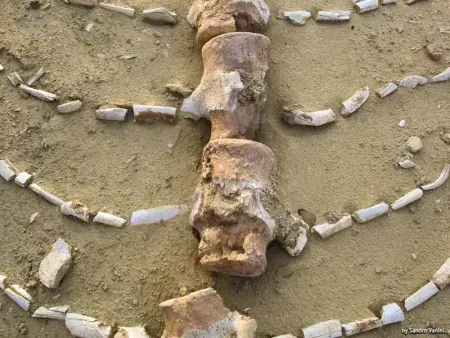
Wadi Al-Hitan — "Valley of the Whales" — is one of the most extraordinary palaeontological sites in the world and a UNESCO World Heritage Site since 2005. The valley contains hundreds of fossils of Archaeoceti — the ancestors of modern whales — dating to approximately 40 million years ago, when the area was covered by a shallow subtropical sea. The fossils include complete skeletons of Basilosaurus and Dorudon — early whales that still possessed vestigial hind legs, providing the most complete and unambiguous fossil evidence of whale evolution from land animals anywhere on Earth. They lie exposed in the desert surface — you walk among them, the same bones that astonished palaeontologists when they were first properly documented in the 1980s. A small but excellent fossil museum at the site entrance provides context. Entrance included.

Wadi El Rayan — Desert Waterfalls

Wadi El Rayan is a protected area containing two large lakes and — remarkably — the only natural waterfalls in Egypt. The waterfalls are not dramatic Niagara-scale features; they are the cascades where the upper lake drains into the lower lake, crossing a limestone ridge in a series of falls surrounded by reeds, waterfowl, and desert cliffs. The combination of water, birds, and desert scenery is unlike anything else in the Cairo day-trip range and provides extraordinary photographic material. The surrounding desert — dunes, rock formations, and distant escarpments — is some of the most beautiful in the Western Desert. Entrance included.

Lake Qarun & Tunis Village

Lake Qarun — a large salt lake at the bottom of the Fayoum Depression, the remnant of the ancient Lake Moeris that was one of the wonders of the ancient world — provides a striking lakescape with abundant waterbirds (including flamingos and herons in season). The nearby Tunis Village is a small artisan community famous for hand-thrown pottery — workshops are open to visitors, and the quality of the locally made ceramics (often using designs drawing on pharaonic and Coptic traditions) makes them among the most distinctive craft souvenirs available in Egypt.

Site Type Highlight
Wadi Al-Hitan UNESCO Palaeontological Site 40-million-year-old whale fossils in the open desert — proof of whale evolution
Wadi El Rayan Protected Natural Area Egypt's only natural waterfalls · desert lakes · sand dunes
Lake Qarun Ancient salt lake Remnant of ancient Lake Moeris · abundant waterbirds including flamingos
Tunis Village Artisan pottery village Hand-thrown pottery workshops · distinctive craft souvenirs

What no competitor tour offers: Most Fayoum tours from Cairo focus on either Whale Valley or Wadi El Rayan but not both. Egypt For Travel's programme combines all four sites — Whale Valley, Wadi El Rayan waterfalls, Lake Qarun, and Tunis Village pottery — in a single day, with a guide who understands the palaeontological significance of Wadi Al-Hitan at a level that transforms a walk through fossils into a lesson in evolutionary biology.

$ 160 | Per person

Full Day (10 hrs)

Ain Sokhna Day Trip from Cairo — Red Sea Beach, Day Use & Boat Trip

(240)

Egypt's Red Sea is not only accessible from Hurghada or Sharm el-Sheikh — the closest point of the Red Sea to Cairo is Ain Sokhna, just 120 kilometres south-east of Cairo via the Ahmed Hamdi Tunnel, approximately 90 minutes by private car. Egypt For Travel's Ain Sokhna Day Trip makes the Red Sea accessible as a Cairo day trip: a private vehicle transfer, resort day use (beach access, swimming pool, sun loungers and parasol), a boat trip on the Gulf of Suez with snorkelling opportunity, and lunch — all within a day, with return to Cairo by evening. For travellers who have spent several days visiting monuments and want a complete change of pace, this is the perfect recovery day.

What Is Ain Sokhna?

Ain Sokhna — Arabic for "warm spring," named for the warm mineral springs in the area — is Egypt's most popular weekend beach destination for Cairo residents. Every Friday and Saturday, thousands of Cairene families make the journey to a coastline of calm, clear Gulf of Suez water, private resort beaches, and straightforward Red Sea swimming that requires no boat trip or coral expertise. The water is calm (the Gulf of Suez is protected from open-ocean conditions), warm year-round, and clear enough for comfortable snorkelling directly from the beach.

The Day Programme

Morning: Private vehicle departs Cairo hotel at 08:00, arriving Ain Sokhna resort by approximately 09:30. Egypt For Travel arranges day use access at a selected 4 or 5-star resort — sun loungers, parasol, beach and pool access, towels, and welcome drink on arrival.

Morning to midday: Free time at the beach and pool. Swim in the Gulf of Suez, snorkel the reef section immediately adjacent to the beach (basic snorkelling equipment typically available for hire from the resort), or simply relax with a book in the shade.

Midday: Boat trip on the Gulf of Suez — a 1-hour excursion by motorboat to a reef point further offshore for better snorkelling (coral, reef fish, occasionally small reef sharks visible). Your guide coordinates the boat trip with the resort's watersports operator.

Lunch: Fresh seafood lunch at the resort restaurant — Ain Sokhna is well-supplied with Red Sea fish and shrimp from the Gulf fleet.

Afternoon: Return to beach and pool for additional relaxation before the 16:00 departure for Cairo. Arrive back in Cairo by approximately 18:00.

Detail Information
Distance from Cairo ~120 km via Ahmed Hamdi Tunnel · 90 min by private car
Water temperature 22–28°C year-round · Gulf of Suez (calmer than open Red Sea)
Best season April–October (warmest air temperatures) · swimmable all year
Resort 4 or 5-star resort day use — confirmed at booking (resort varies by availability)
Boat trip 1-hour motorboat excursion to offshore reef · basic snorkelling included

$ 120 | Per person

Half Day (5–6 hrs)

Cairo Royal Palaces Tour — Manial Palace & Mohamed Ali Palace Shoubra

(110)

Cairo's royal legacy extends far beyond the pharaonic monuments — the city also contains a remarkable collection of 19th and early 20th-century royal palaces, built by Egypt's Khedival and royal family during the era of Egyptian modernisation. Most visitors to Cairo never visit them. Those who do consistently describe them as among the most beautiful and surprising buildings in the city — Islamic, Ottoman, and European architectural traditions fused into uniquely Egyptian expressions of royal ambition. Egypt For Travel's Cairo Royal Palaces Tour covers two of the finest: the extraordinary Manial Palace on Rhoda Island and the grand Palace of Mohamed Ali at Shoubra.

Manial Palace Museum — Rhoda Island

The Manial Palace — built between 1899 and 1929 by Prince Mohamed Ali Tewfik (the uncle of King Farouk), on the southern tip of Rhoda Island — is one of the most extraordinary buildings in Cairo and one of the most overlooked. It is not a single building but a complex of five interconnected palaces in different styles — Moroccan, Syrian, Persian, Ottoman, and European — each decorated in the style of its namesake tradition, all set within an extraordinary private garden of rare trees imported from around the world. The complex contains a hunting museum, a private mosque, a reception palace with a throne room, and a residential palace whose every room is decorated in a different historical style. Your Egyptologist guide will explain the architectural sources of each building and the remarkable personality of Prince Mohamed Ali, who spent 30 years assembling this extraordinary private world.

Palace of Mohamed Ali — Shoubra

The Palace of Mohamed Ali at Shoubra — built for Mohamed Ali Pasha (the founder of modern Egypt) in 1808–1821 in the northern Cairo district of Shoubra — is a grand Italianate palace with an extraordinary centrepiece: a large rectangular water basin (the Hawd al-Samak — "Fish Basin") of marble and alabaster, fed by Nile water and surrounded by a colonnaded arcade with marble statues, the whole enclosed in a pavilion of extraordinary elegance. Mohamed Ali used the palace and its grounds as his summer residence and as a venue for diplomatic receptions — Napoleon's defeated general Kléber is said to have spent time here. The palace has been partially restored and is now a museum open to visitors.

Palace Built Style Highlight Entry
Manial Palace 1899–1929 Multi-style: Moroccan · Syrian · Ottoman · European Five interconnected palaces · exotic gardens · hunting museum ~200 EGP included
Shoubra Palace 1808–1821 Italianate · Ottoman The marble Fish Basin pavilion · Mohamed Ali Pasha's summer residence ~100 EGP included

$ 55 | Per person

Full Day (7–8 hrs)

Cairo Countryside & Farm Day Tour — Egyptian Village Life, Farms & Nile Felucca

(190)

Ninety-five percent of Egyptians live within a few kilometres of the Nile — and the overwhelming majority of those who live outside Cairo live in villages and farms that have changed less in the past century than almost anywhere else in the world. The Egyptian countryside — called el-rif in Arabic — is a world of water buffalo, date palms, mud-brick houses painted with Hajj murals, women in black abayas carrying bread on their heads, men in galabiyas leading donkeys along irrigation channels, and the smell of damp earth and animal and woodsmoke. It is the Egypt that tourists almost never see, and Egypt For Travel's Cairo Countryside & Farm Tour makes it accessible in a single day.

What You Will Experience

Working Farm Visit

Your private vehicle heads north or south of Cairo into the Nile Delta or Nile Valley agricultural land — approximately 60–90 minutes from the city. Your guide has relationships with local farming families who welcome visitors genuinely: you will see water buffalo at work in the fields or at the irrigation wheel (saqiya), watch the bread-baking process in a traditional clay oven (forn), see date palm groves being tended, and observe seasonal agricultural activities — planting, irrigation, harvesting — depending on the time of year. These are working farms, not staged demonstrations. The family you visit will offer Egyptian hospitality: tea, fresh dates, and conversation (with your guide translating).

Village Walk

A walk through a Nile Delta village with your guide provides an unfiltered view of Egyptian rural life: the weekly market (if visiting on market day), the local mosque, the communal water point, the workshops of the local carpenter and blacksmith, and the domestic architecture of a world built from Nile mud-brick and cement. Your guide will introduce you to villagers who are accustomed to respectful visitors, and the conversations — about farming, family, the Nile, Cairo — are frequently the highlight of the day for visitors who take the time to have them.

Felucca on the Nile

A felucca crossing from one bank of the Nile to the other — or a 30-minute sail on a local felucca between villages — provides the essential Nile context for what you have seen on land. In the countryside, the felucca is not a tourist attraction — it is the primary means of crossing the river, and the felucca captains here are farmers and fishermen, not tourism operators. The crossing takes 10–20 minutes and provides a view of the Nile Valley available nowhere else.

Traditional Lunch

Lunch is served in a local home or a simple countryside restaurant — not a tourist venue — with dishes prepared from local ingredients: fresh ful medames (slow-cooked fava beans), ta'amiya (Egyptian falafel), molokhia (a distinctive Egyptian leafy vegetable stew), grilled chicken or fish, fresh bread, and local seasonal vegetables. This is Egyptian home cooking, not hotel Egyptian food, and the difference is considerable.

Experience What You Will Encounter
Working farm Water buffalo · clay oven bread · date palms · saqiya water wheel · family hospitality
Village walk Mud-brick architecture · local market · craftsmen · real Egyptian daily life
Felucca crossing Nile crossing by working village felucca — not a tourist boat
Traditional lunch Ful · ta'amiya · molokhia · fresh bread · home cooking, not restaurant food

$ 95 | Per person

Full Day (8 hours)

Cairo Pyramids, Memphis & Saqqara Full-Day Private Tour

(120)

There is no better introduction to ancient Egypt than a single day that takes you from the world's most famous monuments to the very origins of pyramid-building — all with a private licensed Egyptologist guide who knows not just what you are looking at, but why it matters. The Cairo Pyramids, Memphis & Saqqara Full-Day Tour is Egypt For Travel's most popular Cairo day trip, combining the legendary Giza Pyramids, the Great Sphinx, the world's oldest pyramid at Saqqara, and the ancient capital of Memphis into one efficiently paced, deeply informative private experience — from $60 per person, all entrance fees included, no hidden costs.

What You Will See

The Giza Pyramids Complex

Your day begins at the Giza Plateau — one of the most extraordinary landscapes on Earth. The three pyramids of Khufu, Khafre, and Menkaure were built during the Fourth Dynasty (c. 2560–2510 BC) and remain the only surviving Wonder of the Ancient World. Your Egyptologist guide will explain the construction techniques, the astronomical alignments, the theological purpose of the pyramid form, and the political context that made this building programme possible. You will have time to photograph the pyramids from the panoramic viewpoint and to visit the Valley Temple of Khafre — the best-preserved Old Kingdom valley temple in Egypt, where the mummification and purification rituals of the royal burial were conducted.

Optional upgrade: enter the interior of the Great Pyramid of Khufu (additional 800 EGP per person, bookable on the day). The interior passage descends to the burial chamber — a claustrophobic but extraordinary experience.

The Great Sphinx

The Great Sphinx of Giza — 73 metres long, 20 metres high, carved from a single limestone outcrop — has guarded the Giza Plateau for 4,500 years. Between the paws of the Sphinx stands the Dream Stele of Thutmose IV, recording the promise the god made to the prince in a dream: clear the sand from my body and you will be pharaoh. Your guide will explain the missing nose (the real story — not Napoleon's cannons), the water erosion debate, and the Sphinx's relationship to the pyramid complex.

Saqqara — The Step Pyramid & Ancient Necropolis

The most important site for understanding why the Giza Pyramids exist, Saqqara is where it all began. The Step Pyramid of Djoser — built c. 2667 BC by the architect Imhotep — is the oldest large-scale stone building ever constructed by human beings, a 62.5-metre six-tiered limestone colossus that represents the moment human civilisation first decided to build in stone. Your guide will walk you through the mortuary complex including the Heb-Sed court (the eternal ceremonial stage built for the pharaoh's divine renewal), the serdab with its statue of Djoser, and the enclosure walls with their 13 false doorways. Time permitting, visit the beautifully painted Mastaba of Ti or the subterranean Serapeum (underground galleries housing the sacred Apis bull sarcophagi — 70-tonne granite coffins in underground tunnels).

Memphis — Egypt's First Capital

The day concludes at Memphis — the city founded by Narmer at the moment of Egypt's unification around 3100 BC, which served as Egypt's capital for most of the Old Kingdom. The open-air museum houses the magnificent colossal statue of Ramesses II (10 metres long, carved in limestone, lying on its back in a specially built shelter) and the impressive alabaster Sphinx — the second-largest sphinx in Egypt after the Great Sphinx at Giza. Your guide will explain Memphis's role as the administrative and religious heart of ancient Egypt and its relationship to the necropolis at Saqqara on the plateau above.

Site Entrance Fee (2026) Highlight
Giza Pyramids Complex 700 EGP (~$15) — included Three pyramids + Sphinx + Valley Temple
Great Pyramid interior (optional) 1500 EGP extra (~$32) Descend to Khufu's burial chamber
Saqqara 600 EGP (~$12) — included Step Pyramid + mortuary complex + optional tombs
Memphis Open-Air Museum ~200 EGP (~$4.5) — included Colossal Ramesses II statue + alabaster Sphinx

Tour Highlights

✓ The only surviving Wonder of the Ancient World — the Great Pyramid of Khufu
✓ The Great Sphinx — 4,500 years old, carved from a single limestone outcrop
✓ The world's oldest stone building — the Step Pyramid of Djoser at Saqqara
✓ The first capital of a unified Egypt — Memphis and its colossal Ramesses II statue
✓ Private licensed Egyptologist guide throughout — no shared groups
✓ All entrance fees included in the from-$60 price
✓ Private air-conditioned vehicle — door-to-door from your Cairo hotel or cruise port

Why Choose Egypt For Travel

Egypt For Travel holds ETA Category A Licence No. 1947 — the highest classification awarded by the Egyptian Tourism Authority. Every guide is university-educated, English-speaking (other languages available on request), and personally selected. No tipping pressure, no shopping stops, no hidden costs. The price you see is the price you pay. Contact us via WhatsApp: +20 155 555 2466 to confirm your date or customise your itinerary.

$ 60 | Per person

08 Hours

Cairo Museum, Citadel & Old Cairo Private Day Tour

(110)

Cairo's greatest historical treasures span more than 5,000 years and three civilisations — pharaonic, Islamic, and Christian — and this private full-day tour covers the best of all three. From the treasures of Tutankhamun in the Egyptian Museum to the Ottoman grandeur of the Muhammad Ali Mosque atop the Saladin Citadel, to the 2,000-year-old churches of Coptic Cairo and the medieval labyrinth of the Khan El-Khalili bazaar — this is the essential Cairo day, expertly guided by a private licensed Egyptologist, with all entrance fees included from $55 per person.

What You Will See

The Egyptian Museum, Tahrir Square

The Egyptian Museum — founded in 1902 — houses the world's most important collection of ancient Egyptian artefacts: over 165,000 objects spanning predynastic pottery (5000 BC) through the Roman period (4th century AD). The centrepiece is the Tutankhamun Galleries — 13 rooms displaying the complete burial equipment of the boy pharaoh, including the iconic solid-gold death mask, the golden throne, and the four nested shrine coffins. Your Egyptologist guide will navigate the museum's vast collection, identifying the most significant pieces and explaining their context — transforming what could be an overwhelming experience into a coherent, gripping story.

The museum also houses the extraordinary Royal Mummies Room (separate ticket 180 EGP, included in this tour) where eleven pharaohs lie in glass cases — including Ramesses II, Seti I, and Thutmose III — their faces still remarkably preserved after 3,000 years.

Note: The Grand Egyptian Museum (GEM), which opened in November 2025 and houses the complete Tutankhamun collection, can be substituted for the Egyptian Museum on request — please ask at booking.

The Saladin Citadel & Muhammad Ali Mosque

From the Egyptian Museum, your private vehicle drives to the Saladin Citadel — the medieval fortress built by Saladin in 1183 AD on a spur of the Moqattam hills, which has dominated Cairo's skyline for 800 years. Inside the Citadel walls stands the Muhammad Ali Mosque (1830–1848) — the most iconic building in Cairo, its twin Ottoman minarets and lead-clad domes visible from almost every rooftop in the city. The interior is a spectacle of Ottoman grandeur: a central dome 52 metres high, hundreds of hanging glass lamps, and Muhamad Ali's white marble tomb to the right of the entrance.

From the Citadel's eastern ramparts, the panoramic view of Cairo is unmatched: the minarets of Islamic Cairo visible to the north-west, the Pyramids of Giza visible on a clear day to the west, and the Moqattam cliffs behind you to the east. Your guide will point out the key landmarks and explain how the city grew from its founding by the Fatimids in 969 AD to the megalopolis of 22 million it is today.

Old Coptic Cairo

Coptic Cairo — the ancient Christian quarter of the city, enclosed within the walls of the Roman Fortress of Babylon — contains some of the oldest churches in Africa. Your tour includes the Hanging Church (Al-Muallaqah) — its nave suspended above two Roman gatehouse towers, the interior carved with 110 ivory-inlaid panels depicting saints and biblical scenes — and the Church of Abu Serga (Saints Sergius and Bacchus), built over the crypt where the Holy Family is said to have sheltered during their flight into Egypt. The nearby Ben Ezra Synagogue — Cairo's oldest synagogue, where the famous Cairo Geniza collection of medieval manuscripts was discovered — is also visited. The entire Coptic Cairo complex is accessible via the Mar Girgis Metro station, which your guide will point out as a practical note for future independent visits.

Khan El-Khalili Bazaar

The day concludes in the Khan El-Khalili — Cairo's great medieval bazaar, in continuous operation since 1382 AD. Your guide will lead you through the most interesting sections: the gold and silver jewellery quarter, the spice traders, the copper and brass workshops, and the perfume merchants. The El-Fishawi Café — the oldest café in Cairo, which has not closed its doors for over 200 years — is an ideal spot for tea and people-watching. Your guide will explain the fair price for any item you wish to buy, removing the uncertainty from bazaar bargaining.

Site Entrance Fee (2026) Highlight
Egyptian Museum 550 EGP + 1000 EGP mummies — included Tutankhamun galleries · Royal Mummies Room
Saladin Citadel (all mosques) ~180 EGP — included Muhammad Ali Mosque · panoramic Cairo view
Coptic Cairo churches Free — included Hanging Church · Abu Serga · Ben Ezra Synagogue
Khan El-Khalili Free entry Medieval bazaar · El-Fishawi Café · gold quarter

Why Choose Egypt For Travel

Egypt For Travel holds ETA Category A Licence No. 1947. Every guide is a university-educated specialist in Egyptian history, art, and archaeology. No shared groups, no shopping commissions, no hidden costs. Contact us via WhatsApp: +20 155 555 2466 to book or customise your tour — the Cave Church at Mokattam, the Nubian Village of Gezira Badran, or a specific neighbourhood in Islamic Cairo can all be added on request.

$ 55 | Per person

12 Hours

Luxor Day Tour from Cairo — Private Flight & Expert Guide

(858)

Luxor — the city the ancient Greeks called Thebes — is the greatest open-air museum in the world: an entire city built on the ruins of the ancient capital of the New Kingdom Empire, its skyline punctuated by temple pylons, its West Bank hiding 63 royal tombs in painted limestone cliffs. For travellers staying in Cairo who cannot extend their trip to include an overnight in Luxor, Egypt For Travel's Luxor Day Tour from Cairo makes this extraordinary world accessible in a single intensely rewarding day — flying down in the morning, spending the full day with a private Egyptologist guide, and returning to Cairo in the evening. Price on request — contact us via WhatsApp for a personalised quote based on current flight availability and group size.

How the Day Works: Cairo to Luxor by Flight

Egypt For Travel arranges the complete logistics of this day trip: early morning domestic flight from Cairo International Airport to Luxor International Airport (approximately 1 hour), your private Egyptologist guide and vehicle waiting at Luxor Airport, a full day visiting the monuments, and an evening return flight to Cairo. You spend the maximum possible time in Luxor — typically 7–8 hours of site visiting — with none of the planning or coordination overhead.

Flights are booked specifically to maximise your time in Luxor. Egypt For Travel negotiates current airline schedules at the time of booking — domestic flight options and pricing vary by date and availability. We provide the complete quote (flights + guide + vehicle + entrance fees) in a single all-inclusive price. Contact us via WhatsApp: +20 155 555 2466 for today's pricing.

What You Will See in Luxor

East Bank: Karnak Temple

The Karnak Temple complex — the largest religious structure ever built by human beings, covering 200 acres and constructed over a period of more than 1,500 years — is the first stop on the East Bank. The Great Hypostyle Hall alone — 134 columns up to 23 metres high, their surfaces covered in painted reliefs — is one of the most staggering architectural spaces anywhere on Earth. Your Egyptologist guide will explain the political and theological significance of each pharaoh's contribution to the complex, from the 18th Dynasty founders to the additions of Ramesses II and the Ptolemaic period. Allow 1.5–2 hours. Entrance: 450 EGP (included).

West Bank: Valley of the Kings

The Valley of the Kings — the royal burial ground of the New Kingdom pharaohs, 63 tombs cut into the limestone cliffs of the West Bank — is the centrepiece of any Luxor day. The standard ticket covers three tombs; your guide will select the best combination available on the day — typically including KV9 (Ramesses VI) for its astronomical ceiling, one of the painted 19th Dynasty tombs, and optionally KV62 (Tutankhamun) with its additional fee. The guide's knowledge of which tombs are open, which are least crowded at what time, and which contain the most compelling art is invaluable here. Entrance: 750 EGP for 3 tombs (included). Tutankhamun optional: 300 EGP extra.

Hatshepsut Temple (Deir el-Bahari)

The mortuary temple of Hatshepsut — Egypt's most successful female pharaoh, who ruled for 20 years as King of Egypt — rises in three terraced colonnades against the dramatic limestone cliffs of the West Bank in one of the most architecturally refined buildings in ancient Egypt. The relief scenes inside the colonnades include the famous depiction of the expedition to Punt (modern Somalia or Eritrea) and the divine birth narrative asserting Hatshepsut's status as daughter of the god Amun. Entrance: 220 EGP (included).

Colossi of Memnon

The two Colossi of Memnon — 18-metre quartzite statues of Amenhotep III, the only surviving surface remains of the largest temple ever built in ancient Egypt — stand free at the entrance to the West Bank and are visited en route between the Valley of the Kings and Hatshepsut Temple. Entry: free. Your guide will explain the famous "singing statue" phenomenon and the ongoing excavation of the temple behind.

Luxor Temple (optional — evening)

If time permits before your return flight, a brief visit to Luxor Temple at dusk — when the floodlit pylon and colonnade create one of the most beautiful night scenes in Egypt — is included. Entrance: 500 EGP.

Site Entrance Fee (2026) Time
Karnak Temple 600  EGP — included ~1.5 hours
Valley of the Kings (3 tombs) 750 EGP — included ~2 hours
Tutankhamun's Tomb (optional) 700 EGP extra Within Valley visit
Hatshepsut Temple 440 EGP — included ~1 hour
Colossi of Memnon Free — included ~20 min
Luxor Temple (if time permits) 500 EGP — included if visited ~45 min

$ 429 | Per person

12 hours

Alexandria Day Tour from Cairo by Private Car — Full Day

(158)

Alexandria — founded by Alexander the Great in 331 BC and the intellectual capital of the ancient Mediterranean world for nearly a thousand years — is one of the most historically layered cities on Earth. The city that housed the Great Library (the largest repository of knowledge in the ancient world), the Pharos lighthouse (one of the Seven Wonders), the royal palaces of Cleopatra, and the tomb of Alexander himself sits 220 km north-west of Cairo on the Mediterranean coast, and Egypt For Travel makes it accessible as a deeply rewarding private day trip — door-to-door by private air-conditioned vehicle, with a licensed Egyptologist guide, from $79 per person.

What You Will See

Bibliotheca Alexandrina — The Modern Great Library

The day begins at the Bibliotheca Alexandrina — the modern successor to the ancient Great Library of Alexandria, opened in 2002 on the site believed to be near the original library's location on the Mediterranean waterfront. The building itself is an architectural statement: a tilted circular disc clad in grey Aswan granite, inclined toward the sea, its exterior walls engraved with scripts from every writing system in human history. Inside, the main reading room spans eleven cascading terraces under the glass roof — one of the most impressive interior spaces in modern architecture. The complex includes four museums (Antiquities Museum, Manuscripts Museum, Sadat Museum, and the History of Science Museum) and the Planetarium. Your Egyptologist guide will explain the context of the original ancient library and what is known about its destruction.

The Catacombs of Kom el-Shoqafa

The Catacombs of Kom el-Shoqafa — dating to the 2nd century AD — are the most extraordinary funerary monument in Alexandria and one of the Seven Wonders of the Middle Ages. Three levels of underground tombs were cut into the limestone bedrock, accommodating an estimated 300 bodies in niches and burial chambers. What makes them archaeologically unique is the deliberate blending of Egyptian, Greek, and Roman iconography in the same carvings: figures wearing Egyptian pharaonic crowns, Greek architectural columns, and Roman-style portrait busts appear side by side, reflecting the cultural synthesis of Roman Egypt. The main tomb chamber is particularly striking — two perfectly preserved relief figures of the deceased wearing Osirian regalia but depicted in the Romano-Egyptian style. Entrance: ~180 EGP (included).

The Citadel of Qaitbay

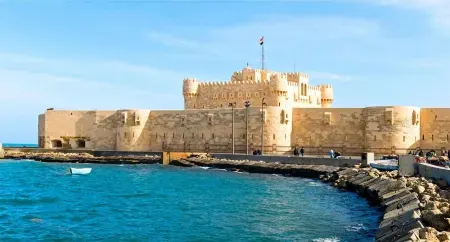
The Citadel of Qaitbay — built in 1477 AD by the Mamluk Sultan Qaitbay on the exact site of the ancient Pharos Lighthouse (one of the Seven Wonders of the Ancient World, destroyed by earthquakes in the 14th century) — stands on a promontory at the entrance to Alexandria's Eastern Harbour, its walls rising directly from the sea. The citadel houses a small naval museum and offers magnificent views across the Mediterranean and back toward the city. The location alone — standing where the 130-metre Pharos Lighthouse once stood, looking out at the same sea that Cleopatra, Julius Caesar, and Alexander the Great all saw from this promontory — is extraordinary. Entrance: ~150 EGP (included).

The Alexandria Corniche and the Montazah Gardens

Alexandria's Corniche — the 20-km Mediterranean seafront promenade — is one of the great urban waterfronts of the Mediterranean world. Your guide will walk you along a section of it, pointing out the key landmarks: the site of the ancient royal palaces (now under the Eastern Harbour), the approximate location of Cleopatra's palace (partially excavated underwater by archaeologists), and the 19th-century European-style architecture that reflects Alexandria's cosmopolitan heyday. Time permitting, a visit to the Montazah Palace gardens — the summer palace of Egypt's royal family, now a public garden and beach — provides a beautiful and relaxed conclusion to the day.

Site Entrance Fee (2026) Highlight
Bibliotheca Alexandrina ~200 EGP — included Modern successor to the ancient Great Library
Catacombs of Kom el-Shoqafa ~200 EGP — included Egyptian-Greek-Roman fusion funerary art · 2nd century AD
Qaitbay Citadel ~200 EGP — included Site of the ancient Pharos Lighthouse · sea views
Alexandria Corniche walk Free Mediterranean waterfront · ancient harbour location

$ 79 | Per person

Follow on Instagram
insta
insta
insta
insta
insta
insta
insta
insta
insta
insta
Egypt For Travel

Egypt For Travel Is A Young Innovative Travel Company Yet Matured And Experienced. Founded In 2005, Egypt For Travel Has Made A Considerable Impact On The Egyptian Tourism Sector By Promoting Egypt As One Of The Fascinating Destinations In The World.

Quick link
  • WHY US
  • Terms and Conditions
  • Responsible Travel
  • About Us
Categories
  • Egypt Travel Packages 2026 & 2027 — Private Tours from $599
  • Nile Cruises 2026 — Luxor to Aswan
  • Egypt Multi-Country Tours 2026 — Jordan, Morocco, Saudi & Dubai
  • Egypt Day Tours 2026 — Private Guided Tours from $55
Newsletter

join the newsletter to receive our best monthly deals

  • We Kindly Accept:
  • Visa
  • MasterCard
  • NBE
  • Bank Transfer

© 2026 Egypt For Travel. All rights reserved.