Nubian Village Tour Aswan — Soheil Island by Felucca
.webp)


.webp)

Overview
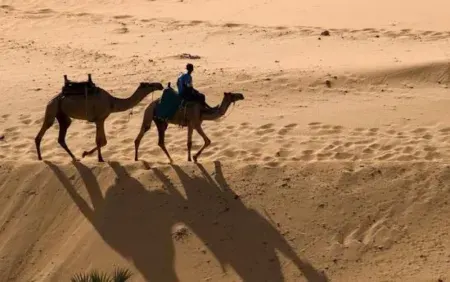
Aswan sits at the historical boundary between Egypt and Nubia — the ancient land that stretched south along the Nile into modern Sudan, home to one of Africa's oldest civilisations and a culture, language, and architectural tradition entirely distinct from mainstream Egyptian Arab culture. Soheil Island, a small island in the Nile a short distance south of Aswan, is one of the most accessible and authentic places to encounter living Nubian culture — its painted houses, its warm hospitality, and its community life largely unchanged by the tourism that surrounds Aswan's ancient monuments. Egypt For Travel's Nubian Village Tour sails to Soheil Island by traditional felucca, with a guide who has personal relationships with island families, ensuring a visit that feels like an invitation rather than a transaction.
Why Soheil Island
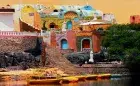
Soheil Island is one of several Nubian-settled islands and West Bank communities around Aswan, but it holds particular significance: it was an important boundary marker in antiquity, with ancient inscriptions carved into its granite boulders recording Nile flood levels and royal expeditions dating back over 3,000 years. The island today is a quiet farming and fishing community of a few hundred Nubian residents, its narrow lanes lined with houses painted in the distinctive Nubian palette — bright blues, ochres, and whites, decorated with geometric patterns and, in many cases, painted murals commemorating a family member's pilgrimage to Mecca.
The Felucca Crossing
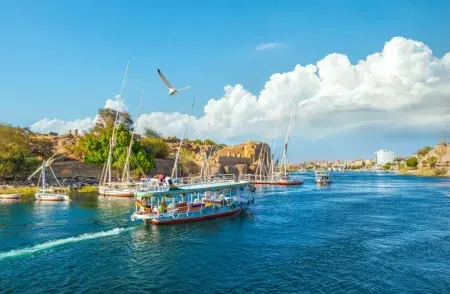
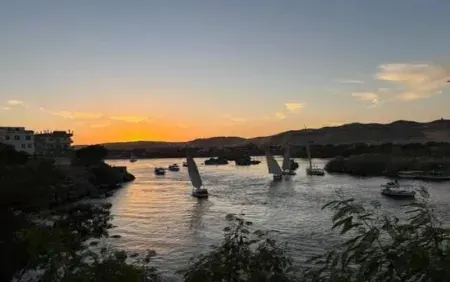
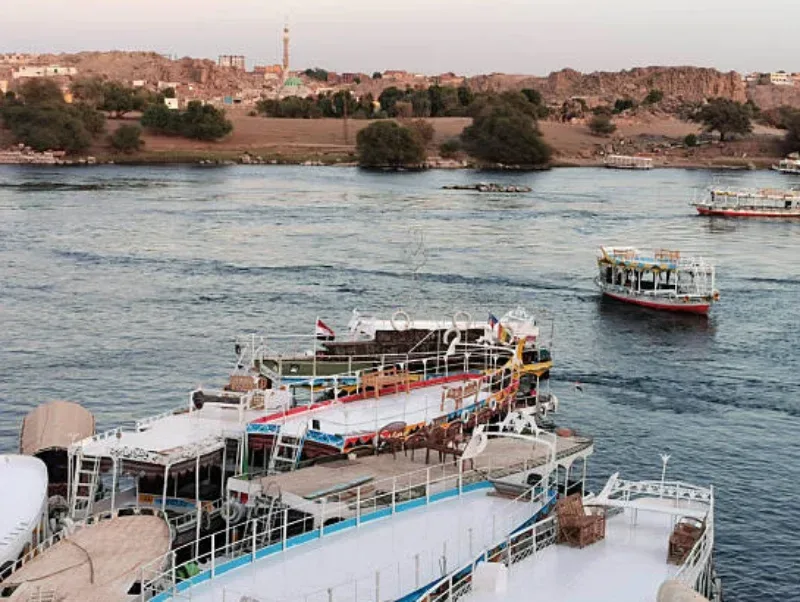
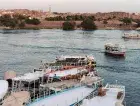
The journey to Soheil Island is itself part of the experience: a 15–20 minute felucca sail from the Aswan Corniche, the wind filling the lateen sail as the boat threads between the granite boulders and small islands of the First Cataract. This stretch of the Nile is the most visually striking anywhere in Egypt — the pink and grey granite outcrops rising directly from the water, smoothed by millennia of river flow, creating a landscape unlike any other point on the Nile's 6,650-kilometre length. Your guide will point out Elephantine Island and the Aga Khan Mausoleum on the West Bank cliffs as you pass.
On the Island — Genuine Hospitality
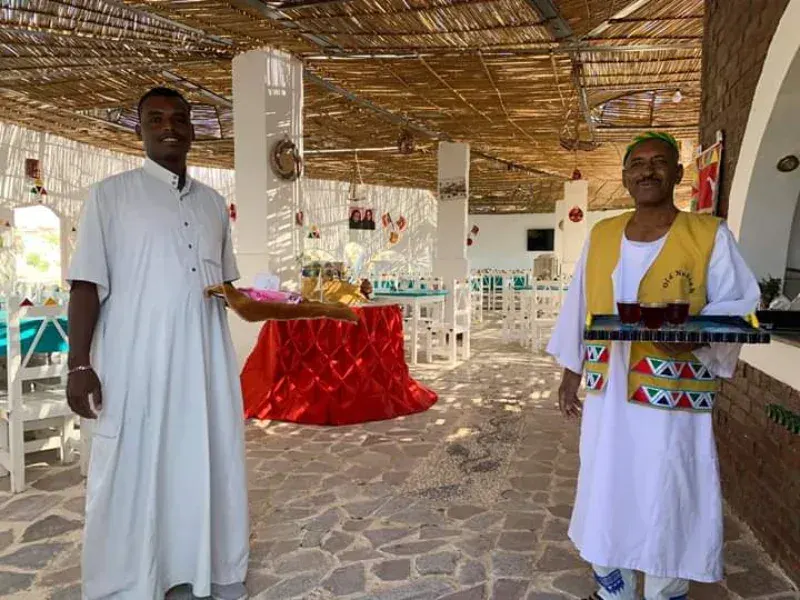
Upon arrival, your guide — who has built relationships with specific island families over years of bringing visitors — leads you through the village to a family home. This is not a staged demonstration: it is a genuine visit, with the family offering tea, sometimes fresh-baked bread, and conversation about island life, farming, fishing, and Nubian traditions. Many families keep a small crocodile in a courtyard enclosure — a tradition referencing the historical reverence for the crocodile god Sobek among riverine Nubian communities, now maintained more as a curiosity and minor tourist attraction than a living religious practice. You will have the opportunity to see traditional Nubian handicrafts — basketry, beadwork, and textiles — available for purchase directly from the families who make them, with proceeds going straight to the community rather than through a bazaar middleman.
What no other guide tells you: The Nubian language spoken on Soheil Island — Kenuzi, one of several Nubian language varieties spoken in southern Egypt and northern Sudan — predates Arabic in the Nile Valley by thousands of years and is unrelated to it; it belongs to the Nilo-Saharan language family, the same broad group as several languages of South Sudan and Chad. UNESCO classifies it as a vulnerable language. Visiting Soheil Island and hearing it spoken in daily conversation is an encounter with one of the oldest continuously spoken languages in the Nile Valley — older than the arrival of Islam, older than Christianity, older than the Greek and Roman periods of Egyptian history.
| Detail | Information |
|---|---|
| Duration | 3–4 hours including felucca crossing both ways |
| Felucca crossing | 15–20 minutes each way · private felucca, your group only |
| On the island | 1.5–2 hours · family visit · village walk · craft purchase opportunity |
| Best time | Late afternoon — combines naturally with sunset on the return crossing |
| Language spoken | Kenuzi Nubian (UNESCO-classified vulnerable language) and Arabic |
| Duration: 03 hours | Type: Private Tour | Run: Everyday |
Included
- Private licensed guide (Nubian-Arabic-English speaking, with established family relationships on Soheil Island)
- Private vehicle — hotel or cruise ship pickup and drop-off to the Aswan Corniche dock
- Private felucca crossing to and from Soheil Island
- Welcome tea with a Nubian family
- Bottled water throughout
- All government taxes and service charges
Excluded
- Nubian handicraft purchases (available directly from village families — your own cost, proceeds go to the families)
- Optional: traditional Nubian lunch with the host family (can be arranged in advance — additional cost, ask at booking)
- Tips for guide, felucca captain, and host family (customary — always at your discretion)
- Personal spending
Itinerary:
15:00 — Hotel or cruise ship pickup, transfer to Aswan Corniche dock
15:15 — Board private felucca, depart for Soheil Island
15:30–15:50 — Felucca crossing through the First Cataract granite islands
15:50–17:30 — Soheil Island: village walk · family visit · tea · optional craft purchases · ancient inscriptions on the granite boulders
17:30–17:50 — Return felucca crossing at sunset
18:00 — Return to hotel or cruise ship
Prices:
Prices
Notes:
Prices Policy
All prices are quoted per person based on the group size confirmed at booking. Single travellers are welcome and pay the same per-person rate; the felucca is private to your group regardless of numbers. Children aged 2–11 receive a discounted rate — please contact Egypt For Travel for current pricing. The Nubian family visit and welcome tea are included in the listed price; any additional food, refreshments, or extended hospitality arranged with the host family are charged separately and agreed directly with the family with your guide's assistance.
Departure Tips
Dress modestly and comfortably — Soheil Island is a traditional, conservative Nubian community, and visitors are asked to dress with shoulders and knees covered as a sign of respect, particularly when entering a family home. Wear comfortable, flat shoes suitable for walking on sandy and sometimes uneven village paths. Bring a small amount of cash in Egyptian pounds if you wish to purchase handicrafts directly from village families, as cards are not accepted on the island. A hat and sun protection are recommended for the felucca crossing, even in the late afternoon. Photography of local residents always requires their consent — your guide will help facilitate this respectfully; never photograph people without first asking.
Children Policy
Children of all ages are welcome on this tour. Children aged 0–1 travel free of charge. Children aged 2–11 receive a discounted rate — please contact Egypt For Travel for current pricing. The felucca has no engine and is generally a calm, stable experience suitable for families; however, life jackets are recommended for young children and are available on request. The village visit involves walking on sandy, sometimes uneven terrain, which is manageable for most children but worth noting for those with very young children or strollers.
Payment Policy
A deposit of 25% of the total tour cost is required to confirm your booking. The remaining 75% balance is due before or on the day of the tour. During peak season (October to April) and for group bookings of 6 or more people, a deposit of 50% is required at the time of booking. Payment is accepted by bank transfer, credit card, or cash in USD, EUR, or EGP.
Installment Policy
Flexible payment installments are available on request, particularly for group bookings or when this tour is combined with a larger multi-day Egypt itinerary. Please contact Egypt For Travel via WhatsApp at +20 155 555 2466 or by email to discuss installment arrangements before confirming your booking.
Tipping Guide
Tipping in Egypt is customary but entirely at your discretion, and Egypt For Travel never adds gratuities to your invoice or applies any pressure regarding tips. As a general guideline: your guide typically receives $10–15 per day, the felucca captain typically receives $5–10 for a half-day experience like this one, and if you have shared tea or a meal with a Nubian host family, a small additional gift or tip (in cash, or in the form of a gift such as tea, sugar, or sweets for the children) is warmly appreciated though never required. All tips are paid directly and discreetly at the end of the experience.
Cancellation Policy
Cancellations made 61 or more days before the scheduled departure incur a 10% cancellation fee. Cancellations made between 31 and 60 days before departure incur a 20% cancellation fee. Cancellations made between 15 and 30 days before departure incur a 50% cancellation fee. Cancellations made within 1 to 14 days of departure are non-refundable (100% cancellation fee). All cancellation requests must be submitted in writing to Egypt For Travel. In the rare event that weather conditions make the felucca crossing unsafe, Egypt For Travel will reschedule the tour at no additional cost or offer a full refund.