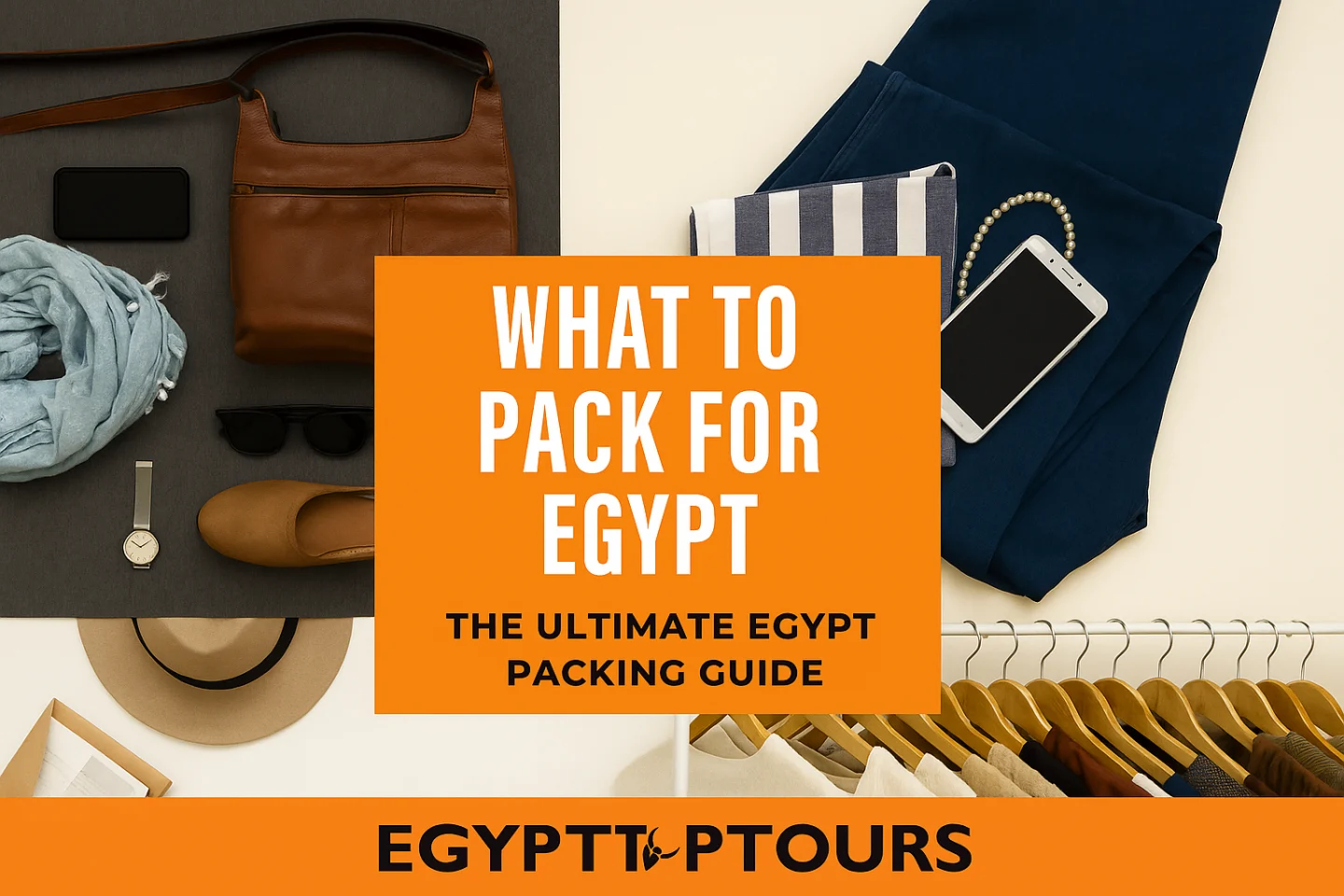
Packing for Egypt is simpler than most people expect — but the details matter. The wrong shoes at the Valley of the Kings will ruin your morning. Insufficient sun protection in Luxor in October will ruin your afternoon. The right modest clothing in Cairo will transform your experience of the city. This guide gives you the complete, practical checklist based on what Egypt For Travel’s Egyptologist guides tell clients every year.
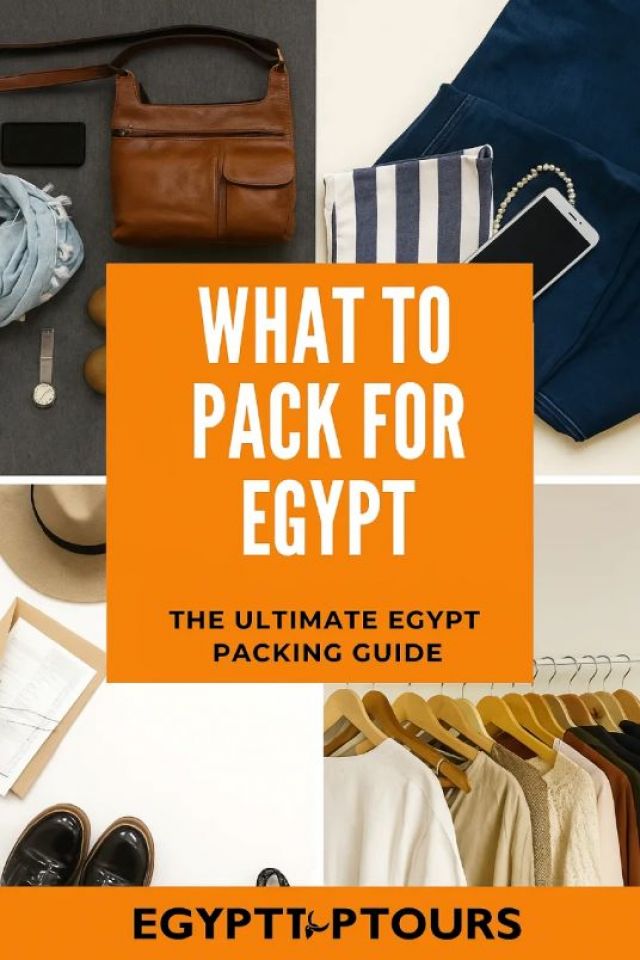
What to Pack for Egypt 2026 — Complete Checklist
Clothing — The Most Important Category
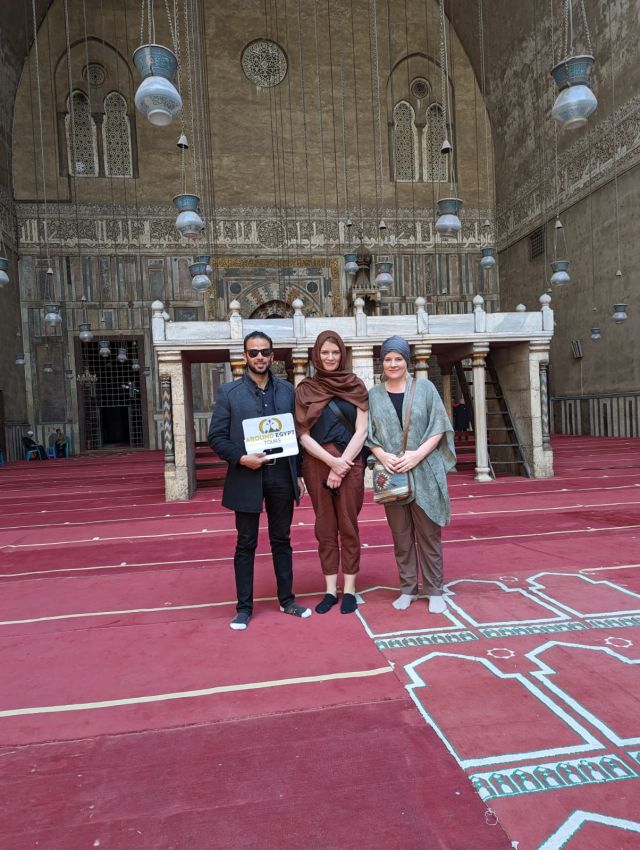
Egypt’s dress requirements for tourists balance two considerations: sun protection (critical from March to October) and cultural respect (important in mosques, markets, and non-resort areas). The practical result is that comfortable, modest, lightweight clothing serves both needs perfectly.
Essential Clothing for All Seasons
| Item | Why You Need It | Quantity |
|---|---|---|
| Lightweight long-sleeved shirts (linen or cotton) | Sun protection at temples + cultural respect in Cairo/Aswan | 3–4 |
| Lightweight trousers or long skirts | Required in mosques · sun protection · cool in evenings | 2–3 |
| T-shirts or short-sleeved tops | For Nile cruise deck · hotels · evenings | 3–4 |
| Comfortable walking shoes (closed-toe, broken in) | Most critical item — temple floors are uneven stone, often hot | 1 pair |
| Sandals or flip-flops | Nile cruise deck · hotel · evenings | 1 pair |
| Wide-brimmed sun hat | Essential from March to October · Valley of Kings in particular | 1 |
| Lightweight scarf or pashmina | Shoulder cover for mosques · warmth on Nile evenings · multipurpose | 1 |
| Light jacket or cardigan | Nile cruise air conditioning is strong · Winter evenings can be cool | 1 |
Key rule for Egypt: Avoid tight or revealing clothing in non-resort areas. This applies to both men and women in mosques, markets, and non-beach locations. In Hurghada and Sharm El Sheikh beach areas, standard beach attire is fine. In Cairo, Luxor and Aswan, covering shoulders and knees when outside the hotel is both respectful and practical for sun protection.
Sun Protection — Non-Negotiable
- Sunscreen SPF 50+: Apply before every morning excursion and reapply at midday. The Egyptian sun is significantly more intense than northern European or North American sun, even in October and November. Bring from home — it is expensive and limited in Egyptian pharmacies.
- Sunglasses (polarised): Essential. The white limestone at temple sites reflects glare intensely. Quality polarised sunglasses make a significant difference to comfort and to photography.
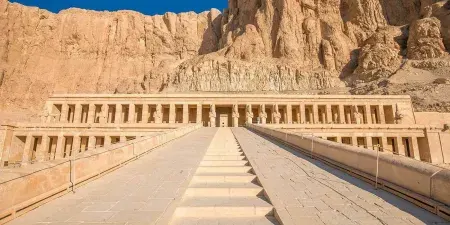
- Wide-brimmed hat: Not optional from March to October. The Valley of the Kings at 11:00 AM without a hat in October is genuinely uncomfortable even at 30°C. Bring one that stays on in wind.
- Lip balm with SPF: Often forgotten, consistently regretted.
Health & Medical Essentials
- Antidiarrheal medication (e.g., Imodium): Even with care, stomach upsets are common among first-time visitors. Bring a full pack.
- Rehydration sachets (ORS): Dehydration in Egypt’s heat is the most common medical issue for tourists. ORS sachets restore electrolytes quickly.
- Paracetamol or ibuprofen: For headaches from heat and sun exposure.
- Antihistamine: For dust reactions, especially at Saqqara and desert sites.
- Insect repellent: Mosquitoes near the Nile after dusk. DEET-based repellent or equivalent.
- Personal prescriptions (minimum 2-week supply): Bring more than you need. Egyptian pharmacies carry many medications but prescription requirements vary.
- Travel insurance documents: Carry both digital and printed copies. Egypt For Travel recommends medical coverage of at least $100,000 USD.
Electronics & Practicalities
| Item | Notes |
|---|---|
| Power adapter (Type C/F) | Egypt uses 220V. Sockets are typically Type C or F (European 2-round-pin). Universal adapter recommended. |
| Portable phone charger / power bank | Long temple days mean you will use your phone camera extensively. Bring a 10,000mAh+ power bank. |
| Camera (with low-light capability) | Tomb interiors are dim. Modern smartphones with night mode work well. Dedicated camera: mirrorless preferred. |
| Unlocked smartphone | Egyptian SIM cards (Vodafone, Orange Egypt) cost ~$5–10 for generous data. Useful for maps and WhatsApp. |
| Small daypack or backpack | For water, sunscreen, camera and guidebook during excursions. Your main luggage stays on the cruise. |
| Water bottle (refillable) | Egypt For Travel provides bottled water on all excursions. A refillable bottle for the ship and hotel is handy. |
Cash & Money for Egypt
- Carry USD cash for the visa: $25 (or $60 for multiple-entry). Cash only at airport visa windows.
- Egyptian Pounds (EGP): Withdraw from ATMs at Cairo Airport (best rates) or in the city. Use EGP for tips, small purchases and bazaars.
- Visa/Mastercard: Accepted at hotels, restaurants and most tourist sites. Now required at some major sites (Giza Pyramids). Bring at least one Visa or Mastercard.
- Tipping cash (EGP): Tipping is expected throughout Egypt. Your guide: $5–10 USD per person per day. Nile cruise staff: $15–20 USD per person at end of cruise. Always tip in cash.
What NOT to Bring to Egypt
- Drone: Drones are prohibited at all archaeological sites and require a permit that is practically impossible to obtain for tourists. Leave it at home.
- Revealing clothing for temple visits: Shorts above the knee and sleeveless tops are technically acceptable at most sites but attract unwanted attention in local areas.
- Large amounts of USD cash: ATMs work well throughout Egypt. You do not need to carry the full budget for your trip in cash from home.
- Expensive jewellery: Leave it at home. Not because of security risk in the conventional sense, but because it attracts persistent vendor attention at sites.
- Multiple suitcases for a cruise: Nile cruise cabin storage is limited. One medium suitcase per person plus a daypack is ideal for a Nile cruise.
Packing for a Nile Cruise Specifically
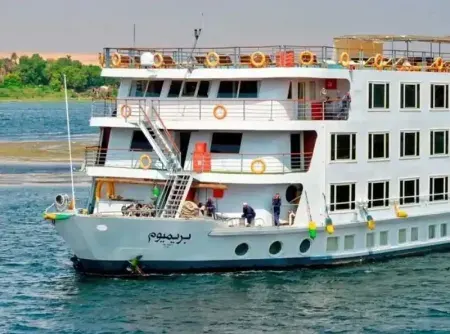
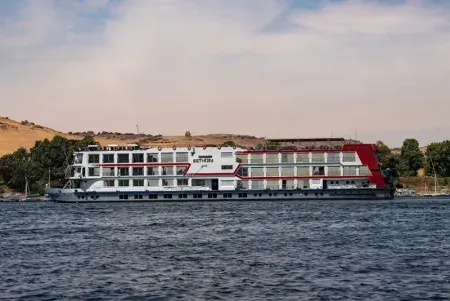
The Nile cruise format has specific packing considerations beyond the general Egypt list:
- Swimwear: The cruise pool deck is one of the best places to spend the afternoon between excursions. Bring at least two sets.
- Light evening wear: Dinner on the cruise is smart casual — not formal, but not shorts. On some ships (like the MS La Traviata) a smart casual code is explicitly in place for dinner.
- Comfortable shoes for the ship: Flip-flops for the pool deck, clean trainers or sandals for the dining room and evening bar.
- Small laundry bag: Most cruise ships have laundry service available but it takes time. Bring enough clothes to manage 2–3 days independently.
- Seasickness medication: The Nile is a river, not an ocean — motion sickness is minimal. But sensitive travelers may appreciate having tablets available for the first night of sailing.
Frequently Asked Questions About Packing for Egypt
What is the dress code for Egypt temples?
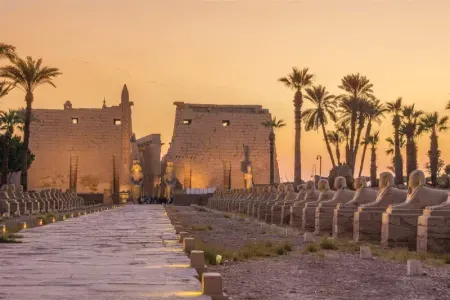
There is no strictly enforced dress code at most Egyptian archaeological sites for tourists. However, covering shoulders and knees is strongly recommended for three practical reasons: sun protection (the sites are almost entirely unshaded), cultural respect in a predominantly Muslim country, and reduced vendor attention in local markets. For mosques — including the Abu Haggag Mosque inside Luxor Temple — covering shoulders, arms and legs is required for both men and women, and women should carry a scarf to cover their hair if entering an active mosque. Egypt For Travel’s guides advise clients on dress requirements at each specific site.
Is it hot in Egypt in October/November? Do I need a jacket?
October and November are among the best months to visit Egypt: daytime temperatures in Luxor and Aswan are 28–32°C (comfortable sightseeing temperature), evenings drop to 18–22°C (pleasantly cool), and Cairo evenings can reach 16–18°C (jacket weather after dark). Bring one lightweight jacket or cardigan for evening use. Nile cruise ships also run strong air conditioning in the dining room and corridors — a cardigan is useful even in October. December to February nights in Aswan can drop to 10–14°C — bring a proper warm layer for these months.
Egypt For Travel provides bottled water, entrance fees, private transport and Egyptologist guides on all tours. Your job is to pack right — we handle everything else. Browse Egypt packages or WhatsApp: +20 155 555 2466. ETA Category A Licence No. 1947.