Luxor Museum & Mummification Museum Private Half-Day Tour
Overview
Most visitors to Luxor spend their time at the monuments — the Valley of the Kings, Karnak Temple, the West Bank sites. Very few realise that Luxor has two museums that are, by themselves, worth making the trip for: the Luxor Museum (consistently rated by Egyptologists as the best-displayed ancient Egyptian museum in the country, with a collection of objects chosen for quality rather than quantity) and the Mummification Museum (a unique institution devoted entirely to the ancient Egyptian embalming process — its tools, substances, techniques, and theology — displayed in a way that is both scientifically rigorous and dramatically compelling). Egypt For Travel's Luxor Museum & Mummification Museum Half-Day Tour covers both with a private licensed Egyptologist guide and all entrance fees in approximately 3–4 hours — ideal for cruise passengers who have already done the major monuments, or for visitors wanting something different from their last morning in Luxor.
Museum 1: The Luxor Museum
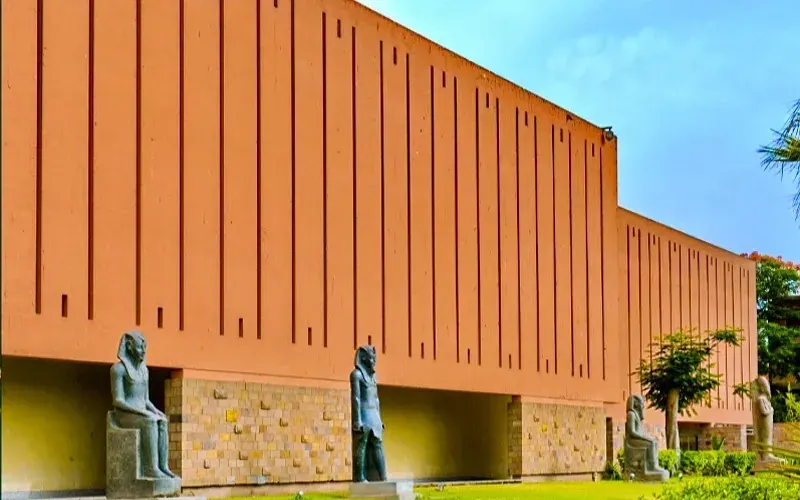
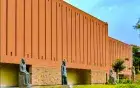
The Luxor Museum — opened in 1975 on the Nile Corniche between Luxor and Karnak Temples — is the result of a deliberate decision to prioritise quality over quantity: to take the finest objects from the Luxor region and display them with the space, lighting, and explanation they deserve, rather than packing them into an overcrowded hall. The result is a museum that consistently surprises visitors who expect it to be overshadowed by the Egyptian Museum in Cairo — and frequently hear from their Egyptologist guide that the Luxor Museum is the better museum experience.
Key Objects in the Luxor Museum Collection
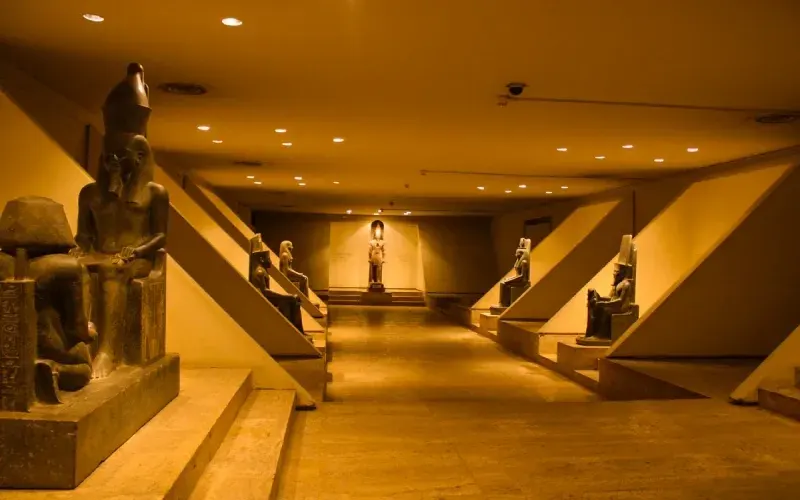
The Cachette Statuary Hall: In 1989, workers excavating the floor of the Luxor Temple court discovered a pit containing 26 extraordinary ancient Egyptian statues in near-perfect preservation — hidden deliberately in antiquity, probably during the Roman period, to protect them from damage. These statues — many of them masterpieces of New Kingdom sculpture — are displayed in a dedicated hall in the Luxor Museum, their surfaces still bearing traces of original paint. They include a stunning striding figure of Amenhotep III and an exquisite seated Thutmose III.
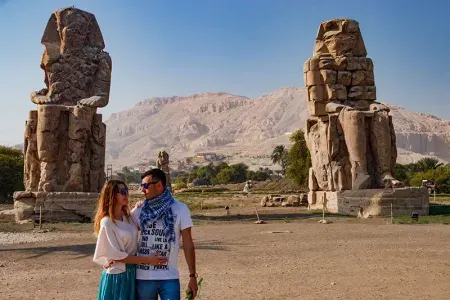
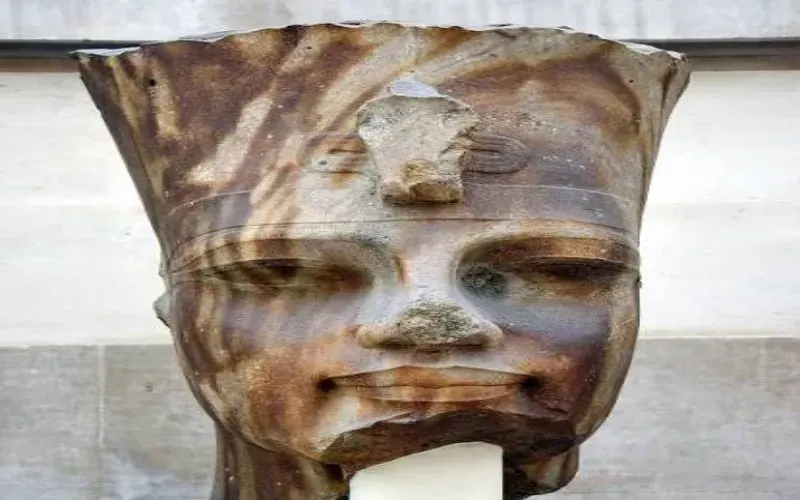
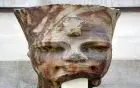
The Colossal Head of Amenhotep III: A quartzite head of Amenhotep III from his mortuary temple (the vanished temple whose only surface remnants are the Colossi of Memnon) — 2.5 metres high, its face combining idealized beauty with a specific, recognisable individual quality that makes it one of the great portraits in ancient art.
The Tutankhamun Military Standards: Objects from Tutankhamun's burial equipment not displayed in the Egyptian Museum or the Grand Egyptian Museum — including ceremonial military standards whose painted and gilded surfaces retain extraordinary detail.
The Wall of Akhenaten: A reconstruction of a section of the talatat wall built by Akhenaten at Karnak — small sandstone blocks of the same standardised size used throughout the Amarna period, reassembled by Egyptologists to reveal the original decorative programme. One of the most important surviving records of Amarna-period art.
Two Royal Mummies: The Luxor Museum displays two royal mummies — Ahmose I (the pharaoh who expelled the Hyksos and founded the New Kingdom, c. 1550 BC) and Ramesses I (founder of the 19th Dynasty, returned from a North American museum in 2003 after 136 years abroad). Both are displayed with full interpretive panels. Entrance to this section is included in the museum ticket.
Museum 2: The Mummification Museum
The Mummification Museum — located on the Corniche between the Luxor Museum and Luxor Temple — is a small, focused institution with no equivalent anywhere else in Egypt: a museum devoted entirely to the process, theology, and material culture of ancient Egyptian embalming. Its collection includes:
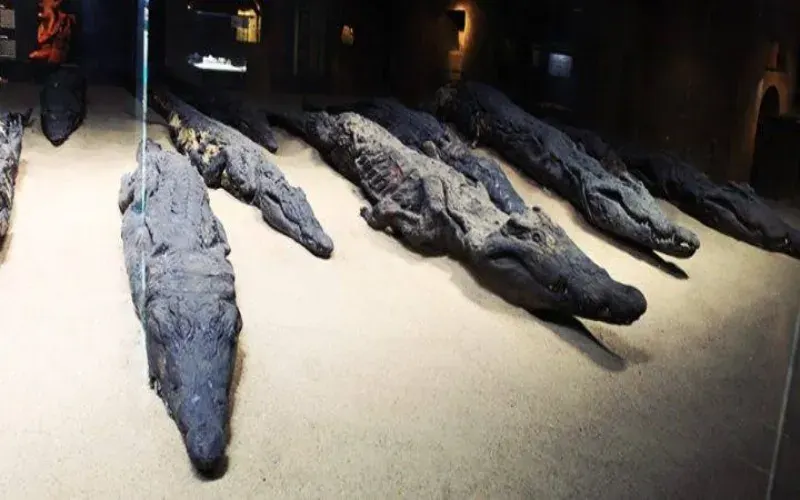
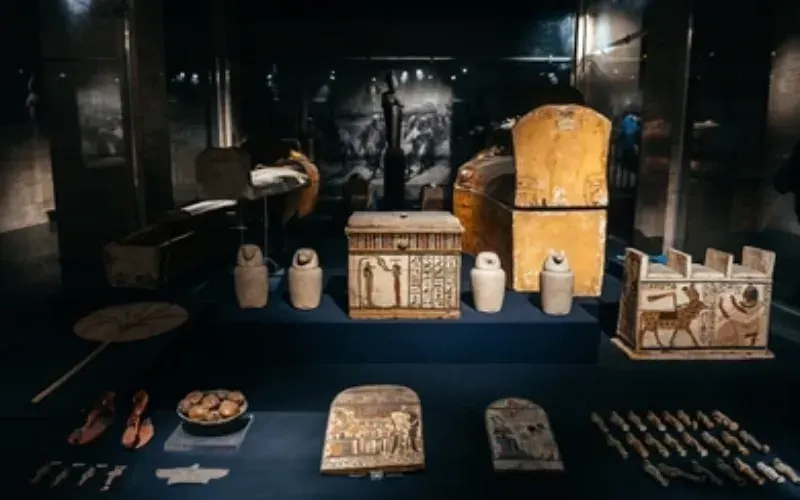
The complete mummification tool set: Bronze hooks, linen bandage rolls, wooden paddles, alabaster canopic jars, and resin-soaked wrappings — the instruments of the embalmers laid out in sequence, their function explained at each step. Mummified animals: Sacred animal mummies — a crocodile, fish, cats, and a baboon — demonstrating the breadth of the ancient Egyptian mummification tradition beyond humans. The mummy of Masaharta: A New Kingdom High Priest of Amun, his face still remarkably expressive, displayed in a climate-controlled case with full biographical information.
Most visitors find the Mummification Museum unexpectedly affecting — because the display strategy is not the standard "look at this ancient object" approach but a step-by-step narrative of what happened to a human body in the 70-day embalming process: the removal of the organs, the desiccation with natron salt, the application of resins, the wrapping of the limbs, and the placement of the amulets and papyri that protected the deceased on their journey through the underworld. Your Egyptologist guide provides the theological framework that makes the practical process meaningful.
What no other guide tells you: The Mummification Museum's most extraordinary display is a mummified fish — a species of Nile perch (Lates niloticus) that was sacred to the gods of Esna and mummified in enormous numbers as religious offerings. More remarkable is what the fish mummies revealed when X-rayed in the 1990s: many of them were not what they appeared — the outer wrapping contained other objects, cheap materials dressed up as expensive votive offerings. Ancient Egyptian pilgrims were being sold fake mummies by temple concessionaires 2,500 years ago. The world's oldest documented consumer fraud.
| Museum | Entry Fee | Time | Star Object |
|---|---|---|---|
| Luxor Museum | ~400 EGP — included | 2 hours | Cachette statuary · Amenhotep III head · Akhenaten talatat wall · two royal mummies |
| Mummification Museum | ~220 EGP — included | 1 hour | Complete embalming toolkit · mummy of Masaharta · sacred animal mummies · fake fish mummies |
Combine this half-day tour with an afternoon felucca sunset sail or the Karnak Sound & Light Show for a perfect full Luxor day.
| Duration: Half Day (3–4 hours) | Type: Privet Tour | Run: Daily (Luxor Museum closed Tuesdays — confirm at booking) |
Included
- Private licensed Egyptologist guide throughout
- Private air-conditioned vehicle — hotel or cruise ship pickup and drop-off
- Luxor Museum entrance (~400 EGP) including royal mummies section
- Mummification Museum entrance (~220 EGP)
- Bottled water throughout
- All government taxes and service charges
Excluded
- Optional: combine with afternoon felucca sunset (see Luxor Felucca Sunset tour)
- Optional: combine with Karnak Sound & Light Show (evening)
- Lunch (recommended Luxor Corniche restaurant — own cost)
- Personal spending and tips
Itinerary:
09:00 — Hotel or cruise ship pickup
09:15–11:15 — Luxor Museum: cachette hall · key sculptures · Amenhotep III head · Akhenaten wall · royal mummies of Ahmose I and Ramesses I
11:15–11:30 — Short walk along the Corniche to the Mummification Museum
11:30–12:30 — Mummification Museum: embalming sequence · animal mummies · Masaharta mummy · guide theological context
12:45 — Return to hotel or cruise ship
Afternoon free · recommend combining with felucca sunset or Karnak Sound & Light
Prices:
Prices
Notes:
Prices Policy
All prices per person. Private available at a premium for groups wanting exclusive use — contact Egypt For Travel for pricing. Weather cancellations receive a full rescheduling without penalty.
Departure Tips
Pickup is at 09:00 — the earliest of any Egypt For Travel tour. Set two alarms. Bring warm clothing — the desert at pre-dawn is significantly cooler than during the day (can be 12–15°C in winter). A fully charged phone or camera is essential. Wear closed-toe shoes.
Payment Policy
25% deposit to confirm booking. Peak season (October–April): 50% deposit. The slot must be confirmed well in advance during peak season.
Installment Policy
Installments available for groups. Contact Egypt For Travel via WhatsApp (+20 155 555 2466).
Tipping Guide
Customary $5–10 per person, paid directly to the crew after the post-landing celebration. Boat captain: 20–50 EGP. Driver: $5–8 per day.
Cancellation Policy
61+ days: 10% · 31–60 days: 20% · 15–30 days: 50% · 1–14 days: 100%. Weather cancellations are rescheduled without charge — this is not a standard cancellation.

.webp)
 -.webp)