Luxor Nobles Tombs, Deir el-Medina & Medinet Habu — The West Bank Beyond the Standard Itinerary
Overview
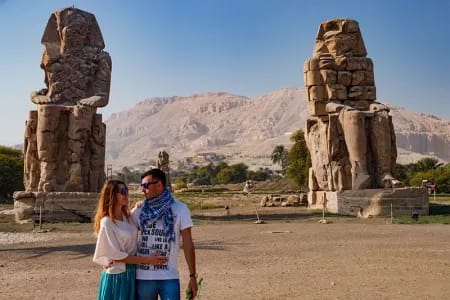
The standard Luxor West Bank itinerary — Valley of the Kings, Hatshepsut Temple, Colossi of Memnon — covers the sites that every first-time visitor should see. But the West Bank contains entire worlds that most visitors never discover: the Tombs of the Nobles (where the middle class of ancient Egypt buried themselves in tombs that are in many ways more humanly immediate than any royal tomb), Deir el-Medina (the village of the craftsmen who built and decorated the Valley of the Kings, and the most extensively documented community in the ancient world), and Medinet Habu (the mortuary temple of Ramesses III — the largest and best-preserved temple on the West Bank, with reliefs of extraordinary violence and beauty). Egypt For Travel's West Bank deep-dive tour is for visitors who want to go beyond the highlights and encounter the full complexity of ancient Theban civilisation.
Site 1: The Tombs of the Nobles
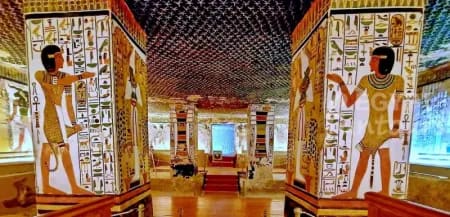
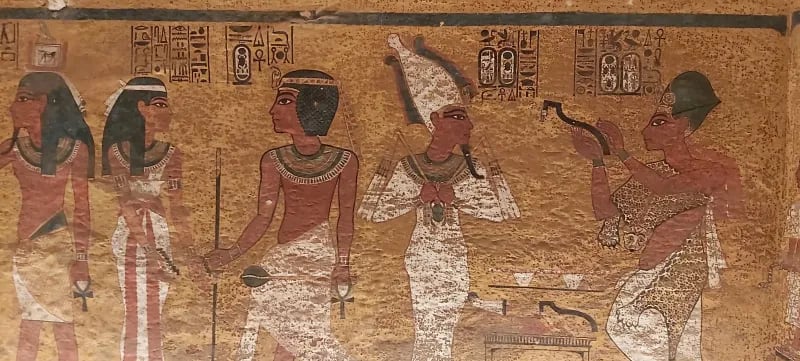
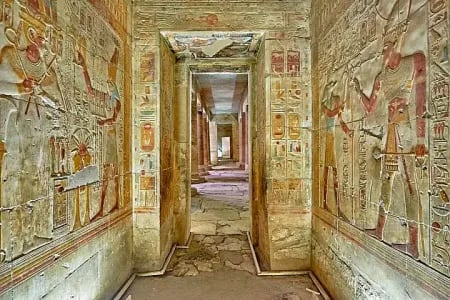
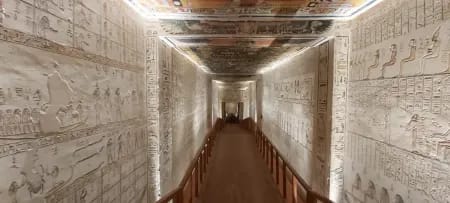
While the pharaohs buried themselves in deep sealed tombs in the Valley of the Kings, the officials, viziers, artists, and administrators of the New Kingdom dug their tombs in the limestone hillsides of the West Bank and decorated them not with scenes of the underworld (as appropriate for royalty) but with scenes of daily life: banquets, hunting, fishing, music, dancing, farming, craftsmanship, and the social life of the New Kingdom elite. As a result, the Nobles Tombs are a uniquely intimate window into what it felt like to be alive — and prosperous — in ancient Thebes.
The most important Nobles Tombs to visit include: the Tomb of Nakht (a scribe and astronomer under Thutmose IV — the finest preserved harvest and banquet scenes in Egypt, painted with colour still vivid after 3,400 years); the Tomb of Menna (estate inspector under Thutmose IV — extraordinary agricultural scenes); the Tomb of Ramose (vizier of Amenhotep III and Akhenaten — unique in showing both pre-Amarna and Amarna artistic styles side by side in the same tomb); and the Tomb of Sennefer (mayor of Thebes — the ceiling painted entirely as a vine arbour, its owner surrounded by grapes, nicknamed "the tomb of the vine"). Your guide will select the best-accessible combination on the day.
Entrance: Varies by tomb — Egypt For Travel arranges all permits
Site 2: Deir el-Medina — The World's First Workers' Village
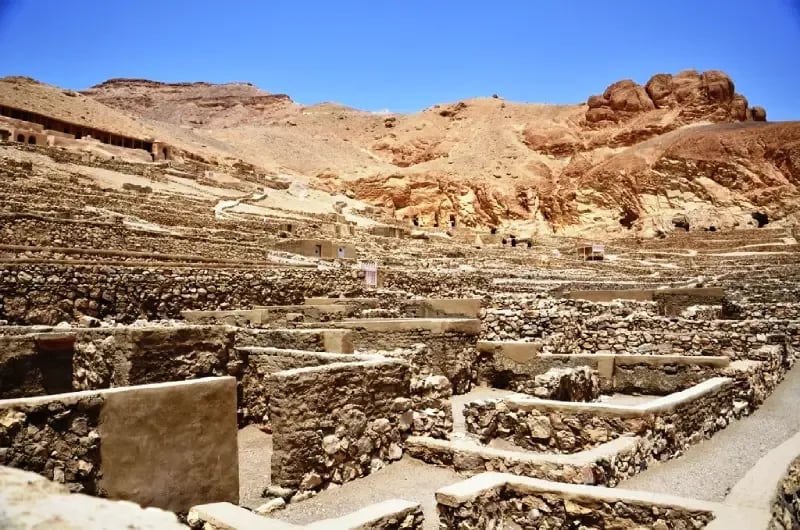
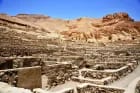
Deir el-Medina is the most extensively documented community in the ancient world: a walled village in a valley between the Valley of the Kings and the Valley of the Queens, purpose-built to house the artisans of the Place of Truth — the specialised craftsmen and their families who spent their entire working lives building and decorating the royal tombs. For 400 years (c. 1550–1070 BC), this community of 60–120 families lived, worked, argued, fell in love, had children, went on strike, and died in this remote valley, leaving behind the most vivid documentary record of ordinary ancient Egyptian life that exists: over 10,000 ostraca (limestone flakes and pottery sherds) covered in notes, letters, legal records, love poetry, accounts, and complaints.
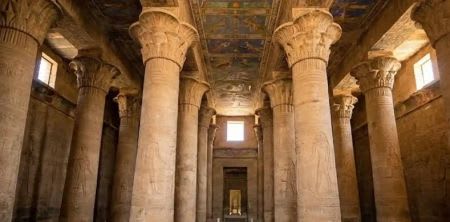
The site contains the ruins of the village itself (the house foundations of each family still clearly visible), a small but extraordinary Ptolemaic temple dedicated to Hathor and Maat (the most completely preserved small temple on the West Bank), and the tombs of the craftsmen themselves — small, steep-shafted tombs with paintings of remarkable quality that demonstrate exactly the skill level of the men who also painted the royal tombs nearby.
What no other guide tells you: Among the Deir el-Medina ostraca is the world's first recorded labour strike — dated to Year 29 of Ramesses III's reign, when the workers stopped work and marched on the mortuary temples to demand their rations (grain, fish, vegetables, salt, and natron) that the state had failed to deliver. Their protest worked: the supplies were eventually delivered. The record of their complaints — written on a limestone flake by the village scribe — sits in the Turin Museum and represents the earliest surviving account of organised labour action in human history.
Site 3: Medinet Habu — Ramesses III's Fortress Temple
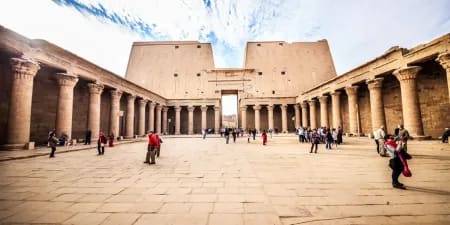
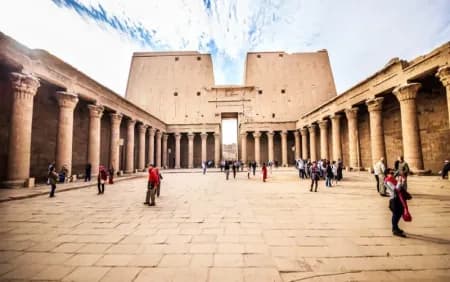
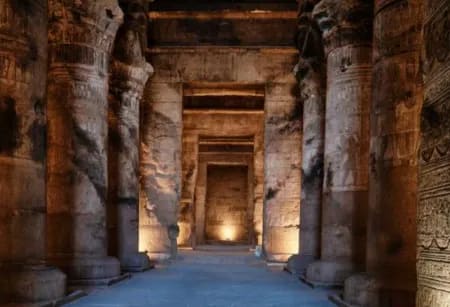
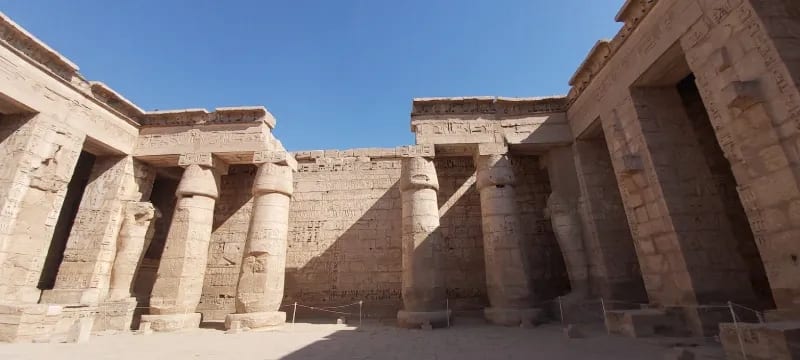
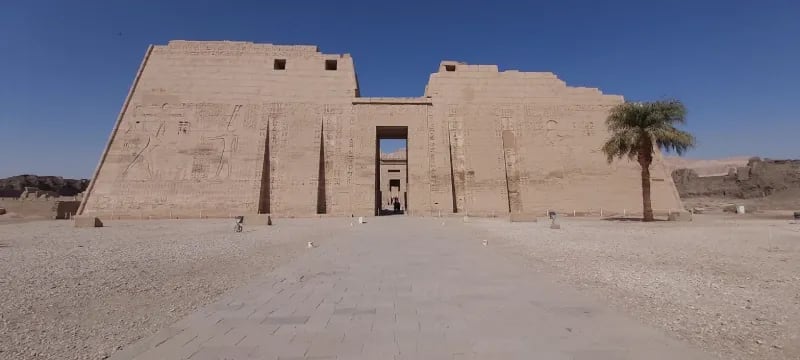
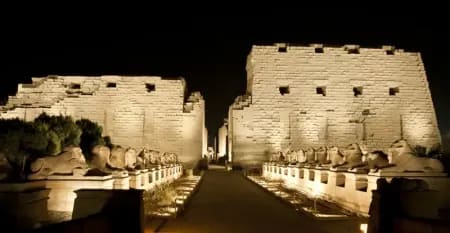
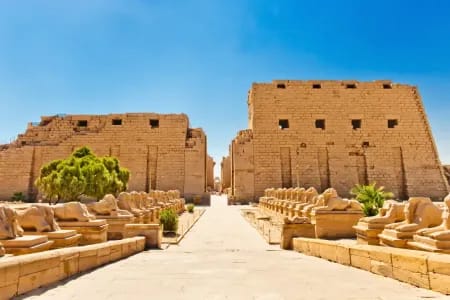
The Mortuary Temple of Ramesses III at Medinet Habu is the largest and most complete temple on the Luxor West Bank — and also the most undervisited, receiving perhaps 10% of the foot traffic of Karnak despite being equally impressive in scale and significantly better preserved. Built between c. 1186 and 1155 BC, the temple served as both a mortuary complex and, in the troubled late 20th Dynasty, as a fortified administrative centre — its massive mud-brick enclosure walls still standing to their full height, the military gate (the only such gate preserved in Egypt) still intact.
The outer wall reliefs of Medinet Habu are among the most historically significant in any Egyptian temple: they depict Ramesses III's naval battle against the Sea Peoples — the great confederation of displaced Bronze Age peoples who attacked Egypt around 1177 BC, contributing to the collapse of the Bronze Age across the eastern Mediterranean. This is the most detailed surviving ancient record of an event that reshaped the entire ancient world, and the reliefs at Medinet Habu are the primary historical source for it. The inscriptions recording the workers' strike from Deir el-Medina also refer to events at this temple.
| Site | Entry Fee | Why It Matters |
|---|---|---|
| Nobles Tombs (Nakht, Menna, Ramose, Sennefer) | ~200 EGP per tomb — included | Daily life painted in vivid detail — the human face of ancient Egypt |
| Deir el-Medina | ~220 EGP — included | The world's most documented ancient community · first recorded strike |
| Medinet Habu Temple | ~300 EGP — included | Largest West Bank temple · Sea Peoples battle reliefs · best preserved |
| Duration: Half Day / Full Day option | Type: Private Tour | Run: Everyday |
Included
- Private licensed Egyptologist guide
- Private air-conditioned vehicle — hotel/cruise pickup and drop-off
- Nobles Tombs: 2–3 tombs as selected by guide (all fees included)
- Deir el-Medina site entrance and Ptolemaic temple
- Medinet Habu Temple entrance
- Bottled water throughout
- All taxes and service charges
Excluded
- Optional: Tomb of Sennefer (additional fee if not included in standard selection)
- Lunch (recommended Luxor restaurant stop — own cost)
- Tips for guide and driver
Itinerary:
08:00 — Hotel/cruise pickup
08:30–10:30 — Nobles Tombs: guide selects 3 best accessible tombs on the day
10:30–12:00 — Deir el-Medina: village ruins · Ptolemaic temple · craftsmen's tombs · ostraca discussion
12:00–13:00 — Medinet Habu: outer wall reliefs · Sea Peoples battle · inner temple
13:00–13:45 — Lunch (optional — recommended local restaurant)
14:00 — Return to hotel/cruise
Can be combined with the Valley of the Kings for a comprehensive full West Bank day
Prices:
Prices
Notes:
Prices Policy
All prices per person. Private available at a premium for groups wanting exclusive use — contact Egypt For Travel for pricing. Weather cancellations receive a full rescheduling without penalty.
Departure Tips
Pickup is at 08:00 — the earliest of any Egypt For Travel tour. Set two alarms. Bring warm clothing — the desert at pre-dawn is significantly cooler than during the day (can be 12–15°C in winter). A fully charged phone or camera is essential. Wear closed-toe shoes.
Payment Policy
25% deposit to confirm booking. Peak season (October–April): 50% deposit. The slot must be confirmed well in advance during peak season.
Installment Policy
Installments available for groups. Contact Egypt For Travel via WhatsApp (+20 155 555 2466).
Tipping Guide
Customary $5–10 per person, paid directly to the crew after the post-landing celebration. Boat captain: 20–50 EGP. Driver: $5–8 per day.
Cancellation Policy
61+ days: 10% · 31–60 days: 20% · 15–30 days: 50% · 1–14 days: 100%. Weather cancellations are rescheduled without charge — this is not a standard cancellation.

.webp)
 -.webp)